Difference Between Pipette Tips, Filter Tips, and Low Retention Tips
- January 19, 2026
- ENQUIRE NOW

In any laboratory setting, accurate liquid handling is essential for reliable experimental results. One of the most important yet often overlooked consumables in a lab is the pipette tip. Choosing the right type of pipette tip—whether standard pipette tips, filter tips or low retention tips—can significantly affect accuracy, contamination control and reproducibility.
This blog explains the difference between pipette tips, filter tips and low retention tips, their applications, advantages and how high-quality solutions like Microlit pipette tips help laboratories achieve precision and consistency.
What Are Pipette Tips?
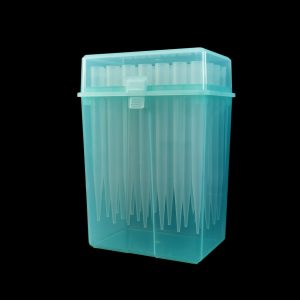 Pipette tips are disposable plastic tips that attach to micropipettes for aspirating and dispensing liquids. They are typically made from high-quality polypropylene and are designed for precise and contamination-free liquid transfer.
Key Features of Standard Pipette Tips
- Used for routine laboratory liquid handling
- Available in multiple volume ranges (10 µL, 200 µL, 1000 µL, etc.)
- Compatible with single-channel and multichannel pipettes
- Offered in sterile and non-sterile variants
- Cost-effective and widely used
Applications of Standard Pipette Tips
Standard pipette tips are suitable for:
- Buffer preparation
- Reagent mixing
- Sample transfer in non-sensitive experiments
- Educational and routine laboratory work
Limitations of Standard Pipette Tips
Although standard pipette tips are economical, they do not prevent:
- Aerosol contamination
- Sample backflow
- Cross-contamination in sensitive workflows
For applications requiring higher safety and accuracy, filter tips are recommended.
What Are Filter Tips?
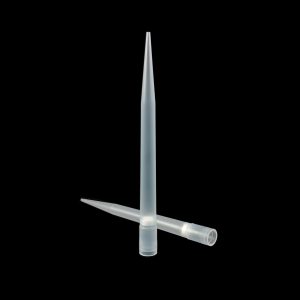 Filter tips are pipette tips that include an integrated filter barrier, usually made from polyethylene, located near the top of the tip. This filter acts as a protective shield between the sample and the pipette.
How Filter Tips Prevent Contamination
The filter blocks aerosols, droplets, and vapours from entering the pipette shaft during aspiration. This prevents contamination of both the pipette and future samples.
Key Benefits of Filter Tips
- Strong aerosol barrier
- Prevents cross-contamination
- Protects pipettes from liquid ingress
- Often DNase, RNase, and pyrogen-free
- Suitable for sterile and sensitive applications
Applications of Filter Tips
Filter tips are essential in:
- PCR and qPCR
- DNA and RNA extraction
- Molecular biology and genomics
- Cell culture
- Clinical diagnostics and testing
- Handling infectious or hazardous samples

While filter tips cost more, they are critical for maintaining sample integrity and experimental accuracy.
What Are Low Retention Tips?
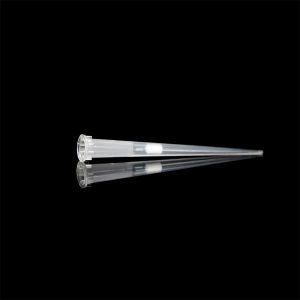 Low retention pipette tips are designed to minimize liquid loss by reducing the adhesion of liquids to the inner surface of the tip. They are manufactured using special surface treatments or modified polypropylene to create a hydrophobic surface.
Why Low Retention Tips Are Important
In standard tips, liquids—especially viscous or low-surface-tension samples—can stick to the tip walls. This leads to:
- Sample loss
- Reduced accuracy
- Inconsistent results
Low retention tips ensure maximum liquid recovery.
Key Features of Low Retention Tips
- Hydrophobic inner surface
- Improved sample release
- Higher pipetting accuracy
- Reduced reagent waste
- Ideal for low-volume and expensive samples
Applications of Low Retention Pipette Tips
Low retention tips are widely used for:
- DNA and RNA samples
- Proteins and enzymes
- Detergents and surfactants
- Glycerol and viscous solutions
- Pharmaceutical and biotechnology research
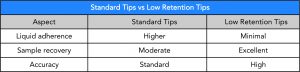
Filter Tips vs Low Retention Tips: Key Differences
Although both enhance pipetting performance, they serve different purposes:
- Filter tips focus on contamination prevention and pipette protection
- Low retention tips focus on maximizing sample recovery and accuracy
Many modern laboratories prefer filter tips with low retention properties, combining both benefits in one solution.
Importance of High-Quality Pipette Tips
The performance of pipette tips depends heavily on manufacturing precision. Poor-quality tips may result in:
- Inconsistent fitting on pipettes
- Leaks or dripping
- Inaccurate volume dispensing
Using trusted brands ensures reliability and repeatability in experiments.
Microlit Pipette Tips: Reliable and Precise Liquid Handling
Microlit is a globally recognized manufacturer of precision liquid handling solutions. Microlit pipette tips are engineered to meet the highest laboratory standards and support a wide range of applications.
Features of Microlit’s Tips
- Made from premium, medical-grade polypropylene
- Available as standard pipette tips, filter tips, and low retention tips
- Excellent compatibility with multiple pipette brands
- DNase, RNase, and pyrogen-free options
- Consistent fit for leak-proof performance
Microlit’s filter tips provide superior aerosol protection for sensitive molecular biology and diagnostic workflows, while Microlit low retention tips ensure maximum sample recovery, making them ideal for research involving valuable reagents.
How to Choose the Right Pipette Tip
Selecting the correct pipette tip depends on your laboratory application:
- Use standard pipette tips for routine liquid handling
- Choose filter tips for contamination-sensitive experiments
- Opt for low retention tips when accuracy and sample recovery are critical
- Use filter low retention tips for advanced molecular and clinical research
Choosing the right pipette tip improves experimental accuracy, protects equipment, and reduces costly errors.
Conclusion
Understanding the difference between pipette tips, filter tips and low retention tips is essential for efficient and accurate laboratory work. While standard pipette tips are suitable for everyday tasks, filter tips provide contamination control, and low retention tips ensure superior accuracy and sample recovery.
With reliable options like Microlit pipette tips, laboratories can confidently perform routine procedures as well as high-sensitivity applications. In precision science, the right pipette tip truly makes all the difference.