Peristaltic Pump Flow Rate and Tubing Selection: How to Choose the Right Combination
- November 3, 2026
- ENQUIRE NOW
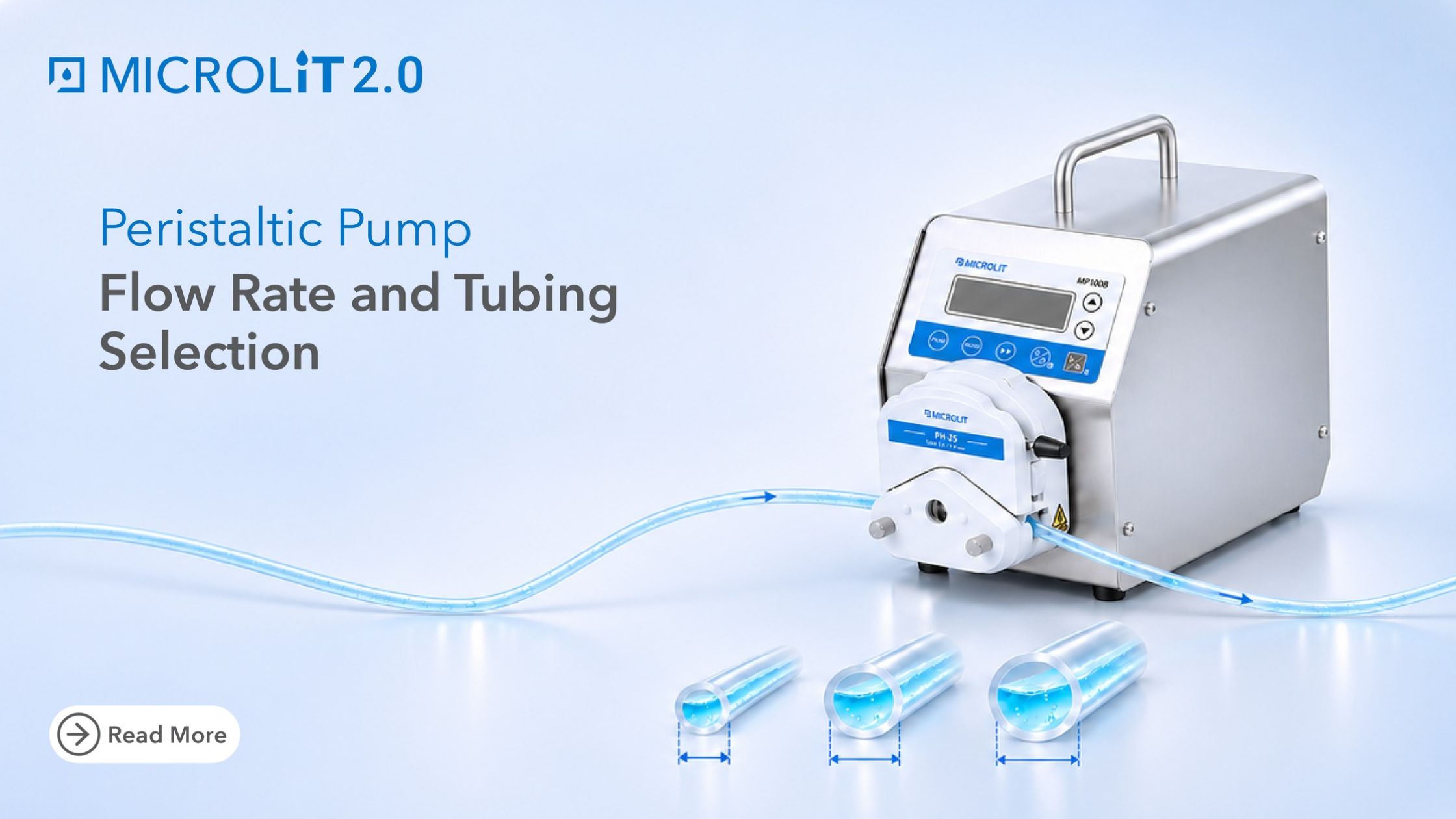
Selecting a peristaltic pump involves more than choosing a motor with the required speed. The actual flow rate depends on several interconnected factors, including tubing diameter, wall thickness, pump head design, rotor speed and the properties of the liquid being transferred.
Choosing the wrong tubing can result in insufficient flow, inconsistent dispensing, premature tube wear or reduced pumping efficiency. Similarly, selecting a pump based only on its maximum flow rate may not deliver the accuracy required for your application.
Whether you are transferring reagents in a laboratory, dosing chemicals in an industrial process or circulating fluids in pharmaceutical manufacturing, understanding peristaltic pump flow rate and tubing selection is essential for reliable fluid handling.
-
Understanding Peristaltic Pump Flow Rate
A peristaltic pump moves liquid through flexible tubing using rotating rollers that compress the tube against a pump head. As the rollers move forward, they create a progressive displacement that pushes liquid through the tubing.
The flow rate is generally expressed in millilitres per minute (ml/min) or litres per hour (L/h).
Three major parameters influence the flow rate:
- Motor speed (RPM): Higher rotational speed generally increases the volume of liquid transferred per minute.
- Tubing inner diameter (ID): A larger inner diameter generally allows a greater volume of liquid to pass with each rotation.
- Pump head and roller configuration: The geometry, number of rollers and tube compression influence displacement, pulsation and flow consistency.
In simple terms, a larger tubing diameter combined with higher RPM can produce a higher flow rate. However, the actual output must be verified under the intended operating conditions.
-
How Does Tubing Size Affect Peristaltic Pump Flow Rate?
Tubing size is one of the most important factors in selecting a peristaltic pump configuration.
The inner diameter determines the available space for liquid movement, while the wall thickness influences how the tubing is compressed by the pump rollers.
A larger inner diameter generally supports higher flow rates, whereas smaller tubing is often selected for low-flow and precision dosing applications.
For example, Microlit’s PH15T pump head supports different silicone tubing sizes, including:
|
Tubing size |
Inner diameter | Approx. flow at 600 RPM |
|
13# |
0.8 mm |
41 ml/min |
| 14# | 1.6 mm |
158.5 ml/min |
|
19# |
2.4 mm |
331.1 ml/min |
|
16# |
3.1 mm | 572.5 ml/min |
| 25# | 4.8 mm |
1,201.6 ml/min |
|
17# |
6.4 mm | 1,728.5 ml/min |
| 18# | 7.9 mm |
2,479.1 ml/min |
These are catalogue reference values for silicone tubing under specified laboratory test conditions. Actual flow may vary with the liquid, temperature, tubing condition, pump head and operating setup.
This illustrates why tubing selection should be based on the required flow rate rather than motor speed alone.
-
How to Choose the Right Tubing Material
Tubing material is just as important as tubing dimensions. The liquid being transferred must be chemically compatible with the tubing to prevent swelling, cracking, contamination or premature deterioration.
Some commonly used peristaltic pump tubing materials include:
Silicone tubing: Offers flexibility, elasticity and good biocompatibility. It is commonly used in laboratory, pharmaceutical, food and biotechnology applications. Its suitability should be verified for the specific chemical and operating conditions.
Pharmed® tubing: Often selected for applications requiring good chemical resistance and extended pumping performance. It is used in pharmaceutical and laboratory fluid transfer, subject to compatibility requirements.
PVC tubing: Can be suitable for certain general-purpose liquid transfer applications. Its chemical and temperature limitations should be checked before use.
Viton® tubing: Considered for selected chemical-handling applications because of its resistance to various oils, fuels and chemicals. Compatibility depends on the exact fluid and operating conditions.
No tubing material is universally compatible with every liquid. Always consult a chemical compatibility chart and confirm suitability with the tubing manufacturer before selecting a material.
-
Why Pump Head Selection Matters
The pump head determines how the tubing is positioned and compressed during operation. Its configuration influences flow capacity, pulsation, tubing compatibility and the number of channels.
For example:
- PH15T: Supports a range of tubing sizes and configurations for different flow requirements.
- PH25: Designed for larger tubing sizes and higher flow applications.
- Multichannel pump heads: Allow simultaneous fluid transfer through multiple tubing lines, making them useful for parallel dosing and laboratory automation.
The selected pump head must match the tubing dimensions and the intended operating conditions. Using an incompatible combination can affect flow performance and tubing life.
-
How to Calculate the Required Peristaltic Pump Flow Rate
Before purchasing a peristaltic pump, determine the volume of liquid that needs to be transferred and the time available for the operation.
The basic formula is:
Required Flow Rate = Total Volume ÷ Transfer Time
For example, if an application requires transferring 500 ml of liquid in 10 minutes:
Required flow rate = 500 ÷ 10 = 50 ml/min
The pump and tubing combination should therefore be capable of delivering approximately 50 ml/min under the actual operating conditions.
It is advisable to allow a suitable operating margin rather than running the pump continuously at its maximum capacity.
-
Common Mistakes to Avoid When Selecting Tubing
Even a technically suitable pump may underperform when the tubing is incorrectly selected or installed.
Watch out for these common mistakes:
- Selecting tubing based only on inner diameter: Wall thickness and pump head compatibility are equally important.
- Ignoring chemical compatibility: An unsuitable material may swell, degrade or contaminate the transferred liquid.
- Operating continuously at maximum RPM: This can accelerate tubing fatigue and reduce service life.
- Over-compressing the tubing: Incorrect pressure settings can increase wear and affect flow consistency.
- Ignoring viscosity: Higher-viscosity liquids can change actual flow performance and increase the demands on the pumping system.
- Not recalibrating flow: Periodic flow verification helps account for changes caused by tubing wear and operating conditions.
-
Choosing the Right Peristaltic Pump for Your Application
The right pump should match your flow requirement, tubing specification, liquid properties and operating environment.
Microlit’s range of peristaltic pumps includes speed-variable, Clever Flow and Intelligent Dispensing models, with options for different flow capacities, pump heads and control requirements.
Depending on the model, features include adjustable motor speed, forward and reverse operation, timed dispensing, programmable modes and RS485 communication for integration with compatible automation systems.
Explore the Microlit Peristaltic Pump Range to compare available configurations.
For applications requiring precise liquid transfer, the combination of the correct pump head, compatible tubing and calibrated operating speed is essential.
Choosing a peristaltic pump is a process of matching the right flow rate with the right tubing material and dimensions. Motor speed determines how quickly the pump operates, tubing diameter influences the volume transferred, and material compatibility helps maintain the integrity of the fluid path.
By evaluating these parameters together, laboratories and industrial facilities can achieve more consistent fluid transfer, minimise tubing-related issues and improve operational efficiency.
At Microlit, our peristaltic pump solutions are designed to support diverse laboratory and industrial fluid handling requirements. Contact our team at info@microlit.com for assistance in selecting a suitable pump, pump head and tubing combination for your application.