Peristaltic Pump Troubleshooting: Low Flow, Pulsation, Tube Wear
- November 23, 2026
- ENQUIRE NOW
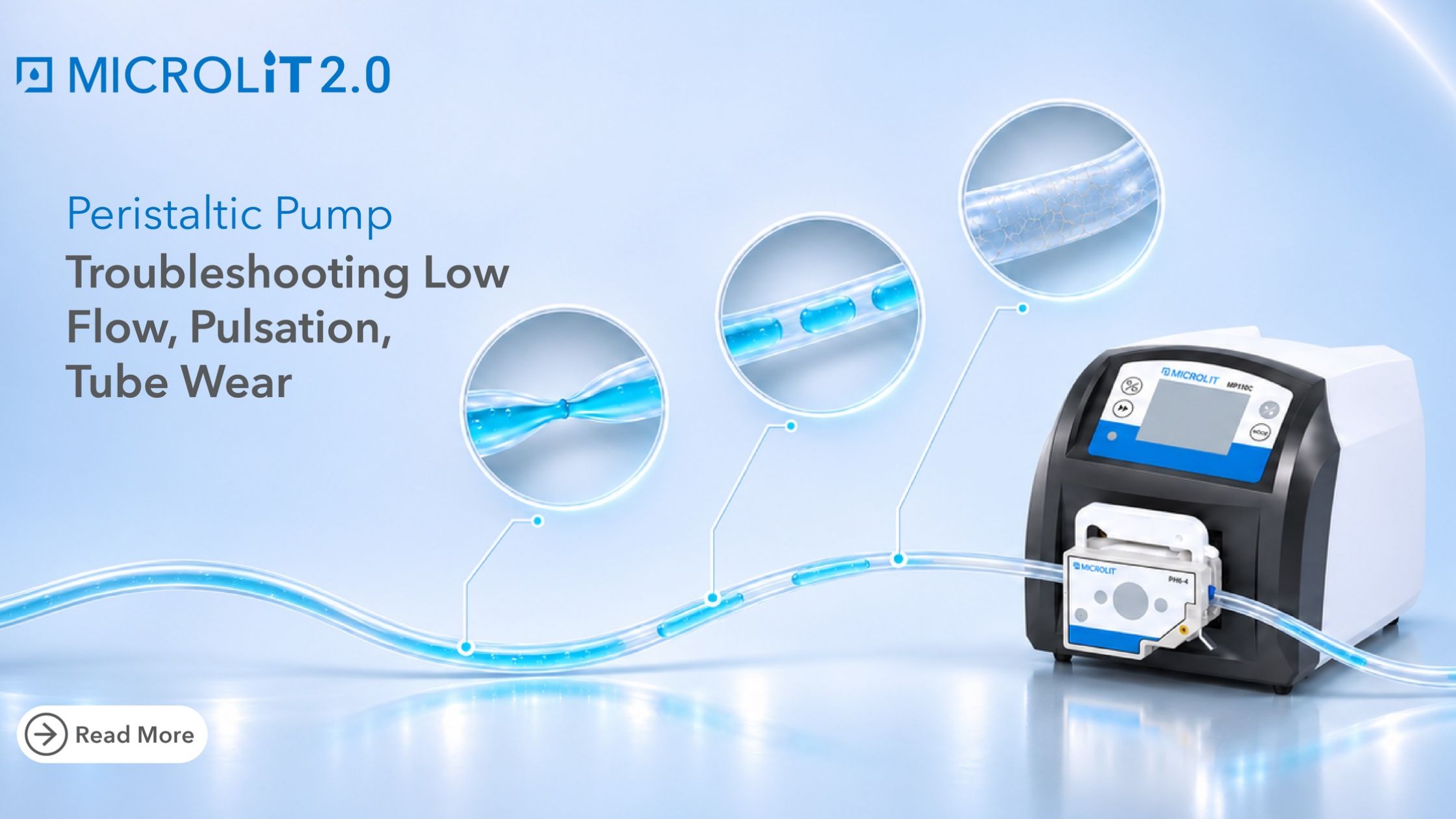
Peristaltic pumps are widely used in laboratories and industrial processes for controlled liquid transfer, chemical dosing, reagent dispensing and fluid circulation. Their simple pumping mechanism, in which rollers compress flexible tubing to move liquid, makes them suitable for applications requiring controlled and contamination-minimised fluid handling.
However, like any fluid transfer equipment, peristaltic pumps can experience operational issues. Low flow rates, inconsistent dispensing, excessive pulsation and premature tubing wear are some of the common challenges users encounter.
Understanding the reasons behind these problems can help minimise downtime, improve pumping performance and extend tubing life.
This guide explains how to troubleshoot common peristaltic pump problems and maintain consistent fluid transfer using the right operating practices.
-
Peristaltic Pump Delivering Low Flow Rate
One of the most common peristaltic pump problems is a lower-than-expected flow rate. If the pump is running at the selected speed but delivering less liquid than required, several factors may be responsible.
Possible causes:
- Incorrect tubing inner diameter or wall thickness.
- Worn, fatigued or permanently deformed tubing.
- Incorrect tubing installation or positioning in the pump head.
- Excessive back pressure or suction lift.
- High liquid viscosity.
- Air entering the suction line or an insufficient liquid supply.
- Operating speed or pump head configuration unsuitable for the required flow.
How to troubleshoot low flow:
- Check whether the installed tubing matches the pump head specifications.
- Inspect the tubing for flattening, cracks, leaks or permanent deformation.
- Verify that the tube is correctly positioned and secured inside the pump head.
- Check the suction and discharge lines for kinks, blockages or air leaks.
- Confirm that the liquid supply is sufficient and the inlet is not obstructed.
- Review the selected RPM and compare the expected flow with the pump’s flow-rate chart.
- Measure the actual output over a fixed period and recalibrate the flow setting if required.
Remember that increasing RPM may not always resolve low flow. If tubing compression, compatibility or installation is incorrect, operating the pump faster may increase wear without solving the underlying issue.
-
Excessive Pulsation or Inconsistent Flow
Peristaltic pumps naturally produce some degree of pulsation because liquid moves through the tubing in successive displacement cycles. However, excessive pulsation can affect sensitive dispensing, dosing and analytical applications.
Possible causes:
- Pump head roller configuration.
- Incorrect or inconsistent tubing compression.
- Worn or damaged tubing.
- Air bubbles in the liquid line.
- Operation at unsuitable speed settings.
- Inadequate damping in applications requiring a smoother flow.
How to troubleshoot pulsation:
- Inspect the tubing for wear, deformation or uneven compression.
- Confirm that the tubing is compatible with the selected pump head.
- Check for trapped air in the suction and discharge lines.
- Review the number of rollers in the pump head. Multi-roller configurations can help reduce pulsation.
- Evaluate whether the operating speed is appropriate for the application.
- Consider a suitable pulsation dampener if the process requires smoother downstream flow.
A useful selection consideration is the number of rollers in the pump head. More rollers can provide more frequent displacement cycles and help reduce pulsation, although the overall performance also depends on pump head geometry and operating conditions.
For applications requiring more controlled fluid delivery, select a pump head and configuration suited to the required flow consistency.
-
Premature Peristaltic Pump Tubing Wear
Tubing is one of the most important components of a peristaltic pump because it directly contacts the liquid and undergoes repeated compression during operation.
Over time, this repeated mechanical action can cause fatigue, deformation and loss of elasticity.
Common signs of tubing wear:
- Visible cracks or surface damage.
- Flattening or permanent deformation.
- Swelling or softening.
- Leakage around the pump head.
- Reduced flow despite unchanged RPM settings.
- Inconsistent dispensing or loss of repeatability.
Possible causes:
- Incorrect tubing material for the liquid being transferred.
- Excessive compression inside the pump head.
- Continuous operation at unsuitable speeds.
- High operating temperature.
- Chemical incompatibility.
- Tubing installed incorrectly or operated beyond its recommended service conditions.
How to prevent premature tubing wear:
- Select tubing with the correct inner diameter and wall thickness.
- Check chemical compatibility with the liquid being transferred.
- Follow the manufacturer’s instructions for tubing installation and pump head adjustment.
- Inspect tubing regularly, especially during continuous operation.
- Replace tubing when signs of fatigue, leakage or deformation appear.
- Avoid unnecessary operation at maximum speed.
- Maintain a record of tubing replacement intervals to identify wear patterns.
There is no universal replacement interval for peristaltic pump tubing. Its service life depends on the material, liquid properties, temperature, operating speed and duty cycle.
-
Air Bubbles and Interrupted Liquid Transfer
Air bubbles in the tubing can cause irregular delivery, interruptions and inconsistent flow measurements.
Possible causes:
- Air trapped during initial priming.
- Loose connections or leakage on the suction side.
- Insufficient liquid supply.
- Incorrect suction line arrangement.
- Gas released from the liquid under operating conditions.
Troubleshooting steps:
- Inspect all inlet-side connections for air leakage.
- Ensure the suction tube remains properly immersed in the liquid.
- Check the tubing for cracks and loose fittings.
- Prime the pump before starting the actual transfer.
- Use the manufacturer’s recommended priming procedure.
For applications involving liquids containing gas or foam, evaluate the pump and tubing configuration under actual operating conditions.
-
Pump Motor Running but No Liquid Being Delivered
If the motor is running but liquid is not moving, the issue may be related to the pump head, tubing or fluid path.
Check the following:
- Is the tubing correctly installed inside the pump head?
- Is the pump head engaging and compressing the tubing?
- Is the tubing damaged or blocked?
- Are the inlet and outlet connections correctly arranged?
- Is the selected rotation direction correct?
- Is the liquid supply available and the suction line unobstructed?
If the pump continues to malfunction after these checks, stop operation and consult the manufacturer’s technical support team rather than attempting unauthorised internal repairs.
-
How to Maintain Consistent Peristaltic Pump Performance
Preventive maintenance is often more effective than troubleshooting after a failure. A few routine practices can help improve pump reliability:
- Inspect tubing before and after critical operations.
- Use only tubing specified for the selected pump head.
- Verify chemical compatibility before transferring a new liquid.
- Keep the pump head clean and free from accumulated residue.
- Check actual flow periodically instead of relying only on the displayed RPM.
- Follow the manufacturer’s recommended tubing installation and replacement procedures.
- Switch off the pump before installing or removing tubing.
- Maintain records of operating hours, tubing changes and performance checks.
-
Choosing the Right Microlit Peristaltic Pump
Selecting the right pump configuration can help prevent several common operating problems.
Microlit offers a range of peristaltic pumps designed for laboratory and industrial fluid handling applications.
Speed Variable Peristaltic Pumps: Suitable for applications requiring adjustable speed, forward and reverse operation, timed dispensing and controlled liquid transfer.
Clever Flow Peristaltic Pumps: Designed for precise liquid metering and dispensing, with an upgraded touchscreen, programmable operating modes and RS485 communication.
Intelligent Dispensing Peristaltic Pumps: Offer advanced dispensing control, multiple programming modes and calibration functions for applications requiring controlled liquid delivery.
Microlit pump configurations are available with different pump heads, tubing sizes and flow capacities to suit varying application requirements.
Explore the Microlit Peristaltic Pump Range to compare available models and configurations.
Low flow, excessive pulsation and premature tubing wear do not always indicate a pump failure. In many cases, the underlying issue can be traced to tubing selection, installation, operating conditions or pump head configuration.
Regular inspection, correct tubing selection and periodic flow verification can help maintain consistent performance and reduce unnecessary downtime.
At Microlit, we offer peristaltic pump solutions designed to support diverse laboratory and industrial fluid handling requirements. Contact our team at info@microlit.com for assistance in selecting the right pump, pump head and tubing combination for your application.
Reliable fluid transfer starts with the right configuration and consistent maintenance.