DNA & RNA Sample Preparation: Pipetting Tips for Accurate Molecular Research
- August 4, 2026
- ENQUIRE NOW
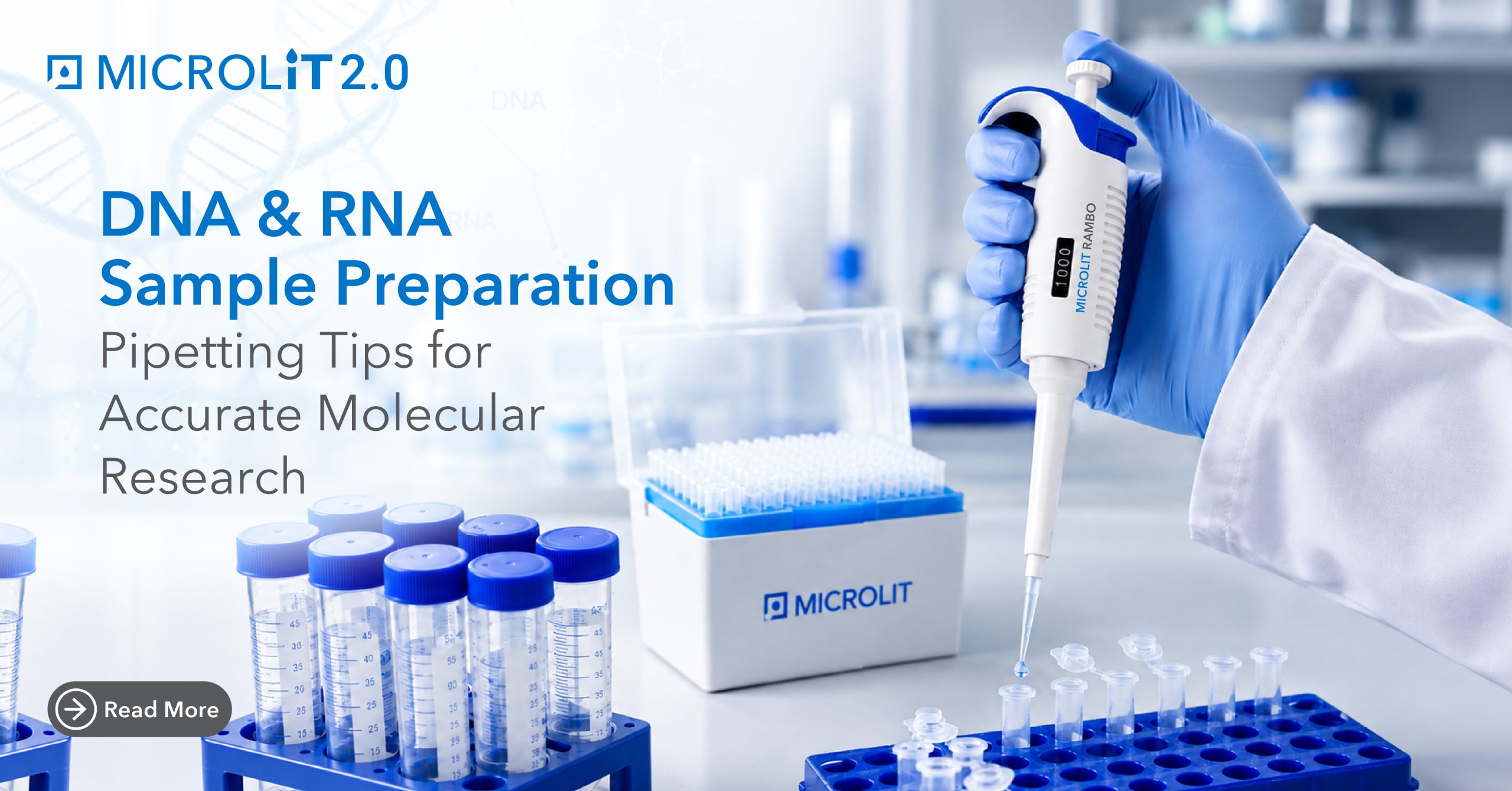
Molecular research often depends on handling very small volumes with exceptional consistency. From DNA sample preparation and RNA sample preparation to PCR, sequencing and gene expression studies, even a small pipetting error can influence downstream results.
Accurate liquid handling is therefore a fundamental part of molecular biology workflows. Choosing appropriate laboratory pipettes, using the correct technique and maintaining good pipetting practices can help researchers improve reproducibility and confidence in their results.
This guide covers practical pipetting tips for DNA and RNA workflows, including choosing the right micropipettes, preventing contamination, handling small volumes and improving overall pipetting accuracy.
Why Accurate Pipetting Matters in Molecular Research
DNA and RNA workflows frequently involve microlitre- and even sub-microlitre-scale volumes. At these volumes, small deviations can significantly affect reagent concentrations, reaction conditions and sample integrity.
For example, inaccurate pipetting during PCR setup can alter the concentration of primers, probes, enzymes or templates. Similarly, errors during RNA sample preparation can affect downstream cDNA synthesis, reverse transcription and gene expression analysis.
Reliable liquid handling helps laboratories achieve:
- Consistent reagent concentrations
- Reproducible reaction conditions
- Reduced sample loss
- Better experimental consistency
- Lower risk of contamination
- Improved reliability of downstream results
For this reason, pipetting accuracy is not simply an equipment specification—it is an important part of the complete molecular research workflow.
-
Choose the Right Micropipette for the Volume
One of the most important principles of accurate pipetting is selecting a pipette that matches the volume being transferred.
Using a large-volume pipette for a very small volume can reduce practical accuracy and precision. Whenever possible, select a pipette whose working range closely matches the volume required.
For molecular biology workflows, laboratories commonly use different micropipettes for different volume ranges. A typical workflow may involve:
- Low-volume micropipettes for small reagent additions
- Mid-range pipettes for primers, buffers and samples
- Higher-volume pipettes for master mixes and larger transfers
If you are selecting a micropipette for DNA extraction, consider the volume range involved at every stage rather than choosing a single pipette for the entire workflow.
-
Use Appropriate Pipetting Technique
The technique used to aspirate and dispense liquid can directly affect accuracy.
For routine aqueous solutions, forward pipetting is commonly used. Depress the plunger to the first stop before aspirating the liquid, release it smoothly and then dispense by pressing through the first stop to the second stop.
Avoid rapidly releasing the plunger, as this can introduce bubbles or cause inconsistent aspiration.
A smooth and controlled motion is particularly important when handling small volumes.
Practical tip:
Keep the pipette as vertical as possible during aspiration and immerse the tip only as far as necessary. Excessive tip immersion can increase the volume of liquid retained on the outside of the tip.
-
Pre-Wet the Pipette Tip
Pre-wetting can improve consistency when working with small volumes or certain liquid types.
Before transferring the actual sample, aspirate and dispense the same liquid several times using the fresh tip. This helps condition the inner surface of the tip and can improve volume consistency.
Pre-wetting can be particularly useful when working with low-volume transfers where even small variations can have a noticeable impact.
However, it should be performed carefully to avoid introducing contamination or aerosols.
-
Handle DNA Samples Carefully
DNA sample preparation can involve multiple steps, including cell lysis, purification, washing and elution. During these steps, sample loss and contamination can affect downstream analysis.
When handling DNA:
- Use clean, appropriate pipette tips.
- Avoid unnecessary transfers.
- Use filter tips where appropriate.
- Minimise exposure of samples to potential contaminants.
- Change tips between samples and reagents.
- Use separate areas or equipment where required for different workflow stages.
When transferring purified DNA, avoid unnecessary vigorous pipetting, particularly when working with high-molecular-weight DNA where excessive mechanical stress may contribute to fragmentation.
The appropriate technique will depend on the DNA extraction method and downstream application.
-
RNA Requires Extra Attention
RNA sample preparation presents additional challenges because RNA is more susceptible to degradation.
RNases are widespread and can be introduced through contaminated surfaces, equipment, reagents or handling practices. Maintaining an appropriate RNase-free workflow is therefore essential.
During RNA workflows:
- Use RNase-free consumables and reagents.
- Wear appropriate gloves and change them when contamination is suspected.
- Use clean, dedicated equipment where appropriate.
- Minimise unnecessary sample handling.
- Keep samples under the conditions recommended for the specific workflow.
- Use suitable filter tips to help minimise contamination risks.
Good pipetting practices are only one part of RNA integrity management, but they play an important role in maintaining a controlled workflow.
-
Avoid Cross-Contamination
Cross-contamination can compromise molecular experiments and produce misleading results.
Aerosols can be generated during aspiration and dispensing, particularly when working quickly or with volatile liquids. Using appropriate pipetting speeds and techniques can help reduce this risk.
Filter tips can provide an additional layer of protection in applications where aerosol contamination is a concern.
Always change the tip when moving between different samples or reagents unless the established laboratory protocol specifically permits reuse.
For sensitive workflows such as PCR and nucleic acid testing, good laboratory practice should include appropriate separation of workflow areas and contamination-control procedures.
-
Change Tips Between Critical Transfers
Using the same pipette tip across multiple samples can introduce carryover.
A simple rule is:
One sample, one fresh tip.
Fresh tips should also be used when transferring different reagents where carryover could affect the reaction.
This is especially important during DNA and RNA workflows, PCR setup and other applications involving low-concentration samples or highly sensitive assays.
-
Pipette Slowly When Handling Small Volumes
Fast pipetting can compromise reproducibility.
When working with very small volumes, aspirate and dispense slowly and consistently. Allow sufficient time for the liquid to enter the tip before moving it away from the source.
Slow, controlled movements can help minimise:
- Bubbles
- Aerosols
- Inconsistent aspiration
- Liquid retention
- Volume variation
Developing consistent technique is therefore just as important as choosing high-quality laboratory equipment.
-
Maintain Your Micropipettes
Even a high-quality micropipette requires appropriate maintenance.
Routine inspection, cleaning, calibration and performance verification can help ensure that pipettes continue to deliver reliable results.
Laboratories should establish maintenance schedules based on factors such as:
- Frequency of use
- Application criticality
- Liquid types
- Manufacturer recommendations
- Laboratory quality systems
- Regulatory requirements
Calibration should be performed according to applicable procedures and standards. For critical molecular workflows, maintaining appropriate documentation of calibration and performance checks can further strengthen laboratory quality practices.
-
Select the Right Pipette Tips
The pipette and tip work together as a liquid handling system.
Poorly fitting tips can result in leakage, inconsistent aspiration or inaccurate dispensing. Always select tips that are compatible with the pipette and appropriate for the application.
For sensitive molecular workflows, filter tips can help minimise aerosol-related contamination.
Tip quality can also influence consistency, particularly when transferring very small volumes. Laboratories should therefore consider tip compatibility, material quality and fit when selecting consumables.
-
Consider Multichannel Pipettes for High-Throughput Work
Molecular research increasingly involves plate-based workflows.
PCR plates, microplates and other multi-well formats can require repeated transfers across multiple wells. In these situations, multichannel micropipettes can improve efficiency and reduce repetitive manual operations.
They can be particularly useful for:
- PCR preparation
- qPCR workflows
- ELISA
- Sample dilution
- High-throughput screening
- Microplate-based assays
For laboratories processing large numbers of samples, moving from single-channel to multichannel liquid handling can significantly streamline routine workflows.
-
Train Users for Consistent Pipetting
The performance of laboratory pipettes depends not only on the instrument but also on the person using it.
Different operators can produce different results if they use different aspiration speeds, immersion depths or dispensing techniques.
Regular training should cover:
- Correct pipette operation
- Volume selection
- Tip selection
- Aspiration and dispensing technique
- Contamination prevention
- Pipette maintenance
- Calibration requirements
Standardising these practices across laboratory personnel can help improve consistency and reproducibility.
Choosing Laboratory Pipettes for DNA and RNA Workflows
When selecting laboratory pipettes for molecular research, look beyond the initial purchase price.
Consider:
Volume range: Does the pipette cover the volumes used in your workflow?
Accuracy and precision: Are the performance specifications appropriate for your application?
Ergonomics: Can the pipette be used comfortably during repetitive work?
Tip compatibility: Are suitable tips readily available?
Calibration: Can the pipette be routinely calibrated and maintained?
Application: Is it suitable for DNA, RNA, PCR and other molecular workflows?
The right combination of pipettes can help laboratories create a more efficient and reliable liquid handling workflow.
Conclusion
Accurate pipetting is fundamental to successful DNA and RNA research. From DNA sample preparation and RNA sample preparation to PCR and downstream analysis, every transfer contributes to the quality and reproducibility of the experiment.
Using the right micropipettes, selecting compatible tips, applying consistent pipetting techniques, preventing contamination and maintaining equipment properly can significantly improve liquid handling performance.
Whether you are selecting a micropipette for DNA extraction, setting up an RNA workflow or upgrading laboratory equipment for molecular research, focus on the complete liquid handling process—not just the pipette itself.
Because in molecular research, precision begins with every microlitre.
MICROLIT – Precision in Every Microlitre.