Understanding Explosion-Proof Peristaltic Pumps in Industrial Applications
- May 20, 2026
- ENQUIRE NOW
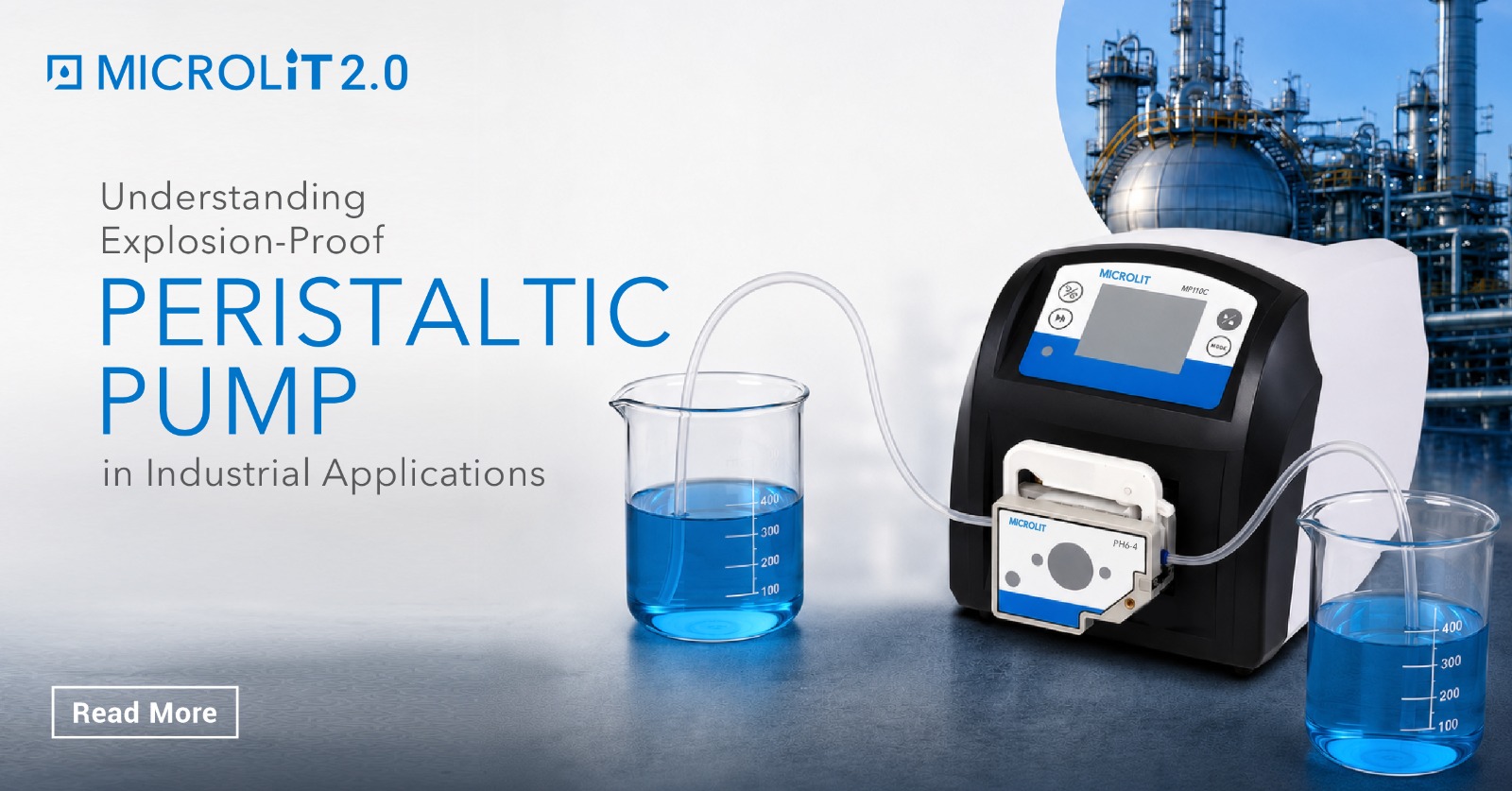
In process environments where flammable vapors, combustible dust or ignitable gases are present as operational constraints rather than exceptions, standard fluid handling equipment is not just inadequate, but also a liability. Explosion-proof peristaltic pumps address this potential hazard, providing the inherent fluid handling advantages of peristaltic technology within an enclosure and electrical architecture designed to contain or prevent ignition under hazardous atmospheric conditions.
Let’s walk through this technical overview of explosion-proof peristaltic pumps, the regulatory frameworks that govern their deployment and the industrial sectors where they’re not optional.
The Peristaltic Operating Principle in Hazardous Environments
To understand why peristaltic technology is particularly well-suited to hazardous area fluid handling, let’s first revisit the operating mechanism. Fluid transfer is achieved through the progressive occlusion of flexible tubing by a rotating roller assembly. The fluid contacts only the inner surface of the tubing throughout the entire transfer cycle. No wetted seals or mechanical components and no internal valves.
Such a design eliminates a class of failure modes that are acutely dangerous in explosive atmospheres. Seal degradation in conventional pump types can cause process fluid to enter the pump housing. In environments where the process fluid is itself flammable or where the ambient atmosphere contains ignitable concentrations of vapor or dust, such leakage in proximity to electrical components or frictional heat sources creates conditions for deflagration or detonation.
The sealed, non-contact fluid path of the peristaltic mechanism significantly reduces this risk vector. When this architecture is combined with an explosion-proof motor and enclosure rated for the relevant hazardous area classification, the result is a fluid handling solution that is both process-accurate and intrinsically safer by design.
Hazardous Area Classification Frameworks
Procurement of explosion-proof equipment requires familiarity with the classification systems that define the nature and degree of hazard in a given installation area. Two primary frameworks govern this globally, with a third of direct relevance to Indian industrial operations.
-
ATEX (Atmosphères Explosibles)
The European Union’s directive-based framework comprises ATEX 114 (equipment directive) and ATEX 153 (workplace directive). Equipment is classified by zone, gas group and temperature class. Zone 0 designates areas where an explosive atmosphere is present continuously or for long periods. Zone 1 covers areas where explosive atmospheres are likely to occur in normal operation. Zone 2 covers areas where explosive atmospheres are not likely to occur in normal operation but may do so occasionally.
-
IECEx
The international certification scheme is aligned with IEC 60079 series standards, providing mutual recognition across participating countries. IECEx certification is increasingly specified in Middle Eastern, Asian, and Australian industrial projects.
-
NEC / UL
The North American classification framework uses Division 1 and Division 2 designations rather than the zone system. Class I covers flammable gases and vapors. Class II covers combustible dust. Class III covers ignitable fibers.
-
IS 5572 (Bureau of Indian Standards)
The Indian regulatory framework governing hazardous area classification is IS 5572, which aligns with the international principles established under IEC 60079-10-1 for gases and vapors, and IEC 60079-10-2 for combustible dusts. Indian industrial installations are required to comply with IS 5572 for zone classification and equipment selection, making it the operative standard for domestic procurement and facility design across sectors, including oil and gas, pharmaceuticals, chemicals, and food processing.
Key Design Elements of Explosion-Proof Peristaltic Pumps
Explosion-proof designation is a combination of engineering decisions applied across the motor, enclosure, electrical interface, and control architecture of the instrument.
-
Flameproof Enclosure (Ex d)
The motor and electrical components are housed within an enclosure engineered to contain any internal ignition and prevent flame propagation to the surrounding atmosphere. The enclosure is designed to withstand the pressure of an internal explosion and to cool escaping gases below the ignition temperature of the external atmosphere before they exit.
-
Increased Safety (Ex e)
Applied to components where arcing or sparking does not occur in normal operation. Additional engineering measures are applied to prevent the possibility of excessive temperatures and the occurrence of arcs or sparks.
-
Intrinsic Safety (Ex i)
The electrical energy within the circuit is limited to levels insufficient to cause ignition, even under fault conditions. This approach is common in instrumentation and control circuits associated with the pump rather than the drive motor itself.
-
Temperature Classification
Explosion-proof equipment is rated by the maximum surface temperature it can reach under fault conditions, expressed as a T-class from T1 (450° maximum surface temperature) to T6 (85° maximum surface temperature). The T-class must be lower than the auto-ignition temperature of the gases or vapors present in the installation environment.
-
Gas Group Classification
Gases and vapors are classified by their minimum ignition energy and maximum experimental safe gap. Group IIA covers propane and similar gases. Group IIB covers ethylene. Group IIC covers hydrogen and acetylene, representing the highest ignition risk category. Equipment must be certified for the gas group present at the installation site.
Explosion-Proof Peristaltic Pumps Application Contexts
The deployment of explosion-proof peristaltic pumps spans several industries where flammable or explosive process conditions are intrinsic to operations.
-
Oil and Gas
Explosion-proof peristaltic pumps are used in chemical injection, produced water transfer, corrosion inhibitor dosing, and sampling line applications where fluid integrity and containment are equally critical.
-
Chemical and Petrochemical Processing
Reactor feed lines, solvent transfer systems, and reagent dosing circuits in chemical plants frequently handle fluids with low flash points in enclosed processing environments. The valve-free, seal-free peristaltic mechanism is particularly valued here for its resistance to reagent contamination and its containment of aggressive or volatile process fluids within the tubing boundary.
-
Pharmaceutical Manufacturing
Solvent-based synthesis, extraction processes, and flammable intermediate handling in API manufacturing facilities require fluid handling equipment certified for Zone 1 or Zone 2 environments. The hygienic fluid path of peristaltic technology aligns with both the explosive atmosphere requirements and the contamination control standards of pharmaceutical manufacturing.
-
Mining and Minerals Processing
Combustible dust is common in coal handling, grain processing, and certain mineral extraction operations. Peristaltic pumps used for reagent dosing in flotation circuits or slurry transfer require enclosures rated for dust-ignition-proof service.
-
Paint, Coatings, and Adhesives Manufacturing
Solvent-laden atmospheres in mixing, filling, and coating application areas present persistent explosive atmosphere conditions. Explosion-proof peristaltic pumps handle solvent and resin transfer with the added assurance of ignition-source elimination.
-
Wastewater and Environmental Treatment
Certain industrial effluent treatment processes involve the handling of methane-generating sludge or chemically reactive wastewaters in enclosed or partially enclosed structures, requiring hazardous area-rated fluid handling equipment.
Microlit’s Explosion-Proof Peristaltic Pump Range
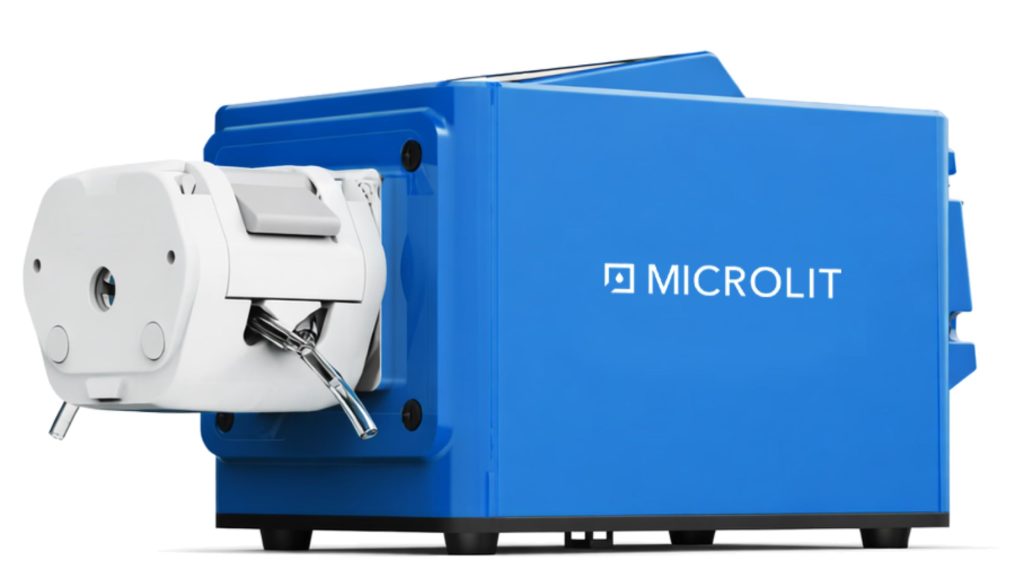
Microlit supplies explosion-proof peristaltic pumps for industrial hazardous area applications. For detailed specifications, certification documentation, zone and division compatibility, and application-specific recommendations, contact the Microlit team directly. Our specialists will assess your installation classification, process fluid requirements, and integration parameters to recommend the appropriate configuration.
The MP100-EP carries forward Microlit’s trusted high-protection design philosophy and dependable performance standards. With optimized structural engineering, the unit is now more compact and lightweight, making it easier to handle and install. While retaining its IP66 protection rating and reliable operational stability, it offers a more economical solution for fluid transfer applications. Combining professional-grade performance with cost efficiency, the MP100-EP is ideal for demanding environments across pharmaceutical, chemical and industrial sectors.