Electronic Pipette Filler Buying Checklist: Speed, Ergonomics and Battery Life
- October 7, 2026
- ENQUIRE NOW
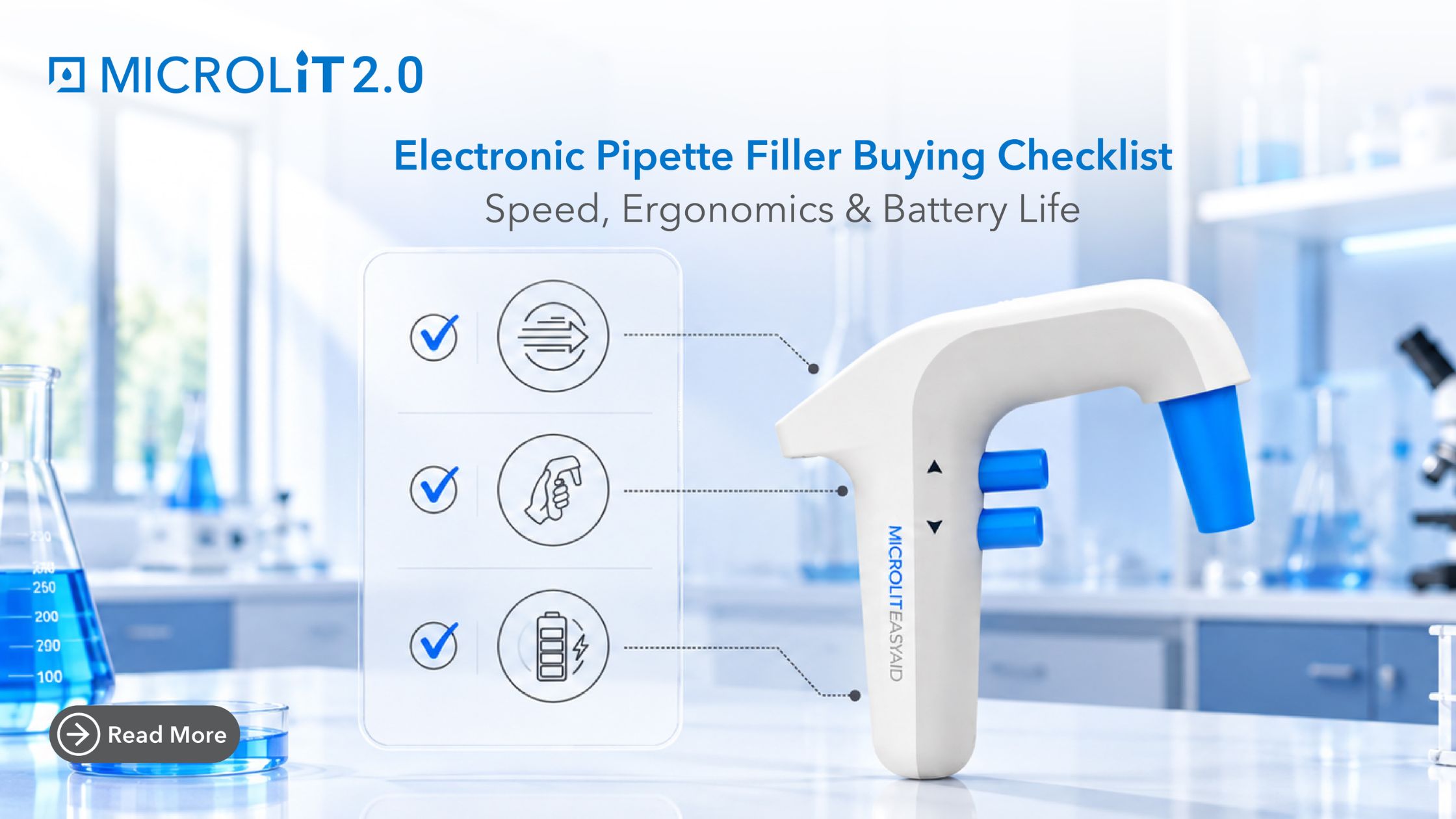
Selecting the right electronic pipette filler is an important decision for laboratories that regularly transfer liquids using serological pipettes. Whether you work in research, clinical diagnostics, pharmaceutical development, quality control or biotechnology, the right instrument can help streamline routine liquid handling and make repetitive tasks more comfortable.
However, choosing an electronic pipette filler involves more than comparing price and appearance. Aspiration speed, dispensing control, ergonomic design, battery performance, pipette compatibility and contamination protection all deserve careful consideration.
This buying checklist explains the essential factors to evaluate before investing in an electronic pipette filler and explores how MICROLIT EASYAID addresses these requirements.
-
Speed: How Quickly Can You Fill and Dispense?
Speed is one of the first specifications to examine when purchasing an electronic pipette filler. In busy laboratories, researchers may perform hundreds of liquid transfers in a single working session. An instrument that supports efficient aspiration and dispensing can help reduce repetitive manual effort and improve workflow.
However, maximum speed should not be the only consideration. Different applications require different levels of control, particularly when handling small volumes or working with delicate samples.
Your buying checklist:
- Does the instrument provide adjustable aspiration and dispensing speeds?
- Can you regulate the flow for different pipette capacities?
- Is it suitable for both rapid liquid transfer and controlled dispensing?
- Can you select the appropriate operating mode for your application?
The MICROLIT EASYAID Electronic Pipette Filler features Force Touch Technology, using magnetic plunger buttons and Hall sensors to regulate aspiration and dispensing speed according to the pressure applied by the user.
It can fill a 25 mL pipette in approximately three seconds at maximum motor speed. The instrument also offers gravity and blow-out dispensing modes, giving users greater flexibility when transferring liquids.
Additionally, users can select the pipette capacity from 1ml, 2ml, 5ml, 10ml, 25ml, 50ml and 100ml to adjust the speed range to suit the pipette in use.
For laboratories handling different sample types, this combination of speed and control can be a valuable advantage.
-
Ergonomics: Is the Instrument Comfortable for Extended Use?
Laboratory professionals often perform repetitive liquid handling tasks for prolonged periods. An uncomfortable grip, excessive weight, or difficult-to-operate controls can contribute to hand fatigue and reduce working comfort.
An ergonomic electronic pipette filler should feel balanced in the hand, provide accessible controls, and allow users to regulate liquid movement without unnecessary effort.
Your buying checklist:
- Is the instrument lightweight and comfortable to hold?
- Are the operating buttons easy to reach?
- Can you control aspiration and dispensing without excessive finger pressure?
- Is the pipette securely held during operation?
- Can the instrument accommodate the pipette sizes used in your laboratory?
MICROLIT EASYAID weighs approximately 238 g and features an ergonomic design intended to support comfortable handling. Its Force Touch interface allows users to regulate speed by adjusting the pressure applied to the plunger buttons.
The universal silicon collet adapter accommodates standard glass and plastic serological pipettes ranging from 1 mL to 100 mL, helping users work with different pipette capacities using the same instrument.
By reducing dependence on manual pipette filling, an electronic filler can also help minimise repetitive hand movements. Actual comfort will depend on the user, working posture, task duration, and frequency of use.
-
Battery Life: Will It Last Through Your Working Day?
Battery performance is particularly important in laboratories where pipetting tasks continue throughout the day. Frequent charging interruptions can disrupt workflows, especially when several users share an instrument or when power outlets are not conveniently located.
When evaluating battery life, consider both operating duration and charging convenience.
Your buying checklist:
- How many hours of continuous operation does the battery support?
- How long does a full charge take?
- Can you identify when the battery is running low?
- Is the battery replaceable?
- Can the instrument be charged conveniently at your workstation?
MICROLIT EASYAID features a rechargeable 3.7 V, 1400 mAh lithium-ion battery. According to its published specifications, a full charge takes approximately three hours and provides up to eight hours of continuous operation.
The instrument also includes LED battery-status indicators. A red light indicates low battery, while a yellow light indicates charging; the yellow light turns off when charging is complete.
Its removable battery design offers additional flexibility for maintenance and replacement. Charging is available directly through the instrument using a micro-USB connection and a compatible 5 V power adapter.
When comparing electronic pipette fillers, remember that actual battery life may vary with operating conditions and usage patterns.
-
Pipette Compatibility: Does It Support Your Applications?
An electronic pipette filler should accommodate the pipettes routinely used in your laboratory. Before purchasing, verify the supported capacity range and compatibility with the glass or plastic serological pipettes required for your workflows.
MICROLIT EASYAID is compatible with standard serological pipettes from 1 mL to 100 mL. Its universal silicon collet adapter is designed to hold the pipette securely during aspiration and dispensing.
This broad capacity range makes it suitable for laboratories that handle different liquid volumes across research, clinical diagnostics, and quality-control applications.
Before ordering, confirm compatibility with your specific pipettes and operating requirements.
-
Contamination Protection and Maintenance
An electronic pipette filler should protect its internal components from accidental liquid entry and support appropriate laboratory hygiene practices.
Look for a suitable in-line filter, a secure pipette connection, and components that can be cleaned or sterilised according to the manufacturer’s instructions.
MICROLIT EASYAID incorporates a hydrophobic 0.2-micron PTFE in-line membrane filter designed to help prevent aerosol contamination and accidental liquid ingress. Its collet assembly and filter holder are autoclavable at 121°C and 15 psi for 10–15 minutes, as specified by the manufacturer.
These features can be especially useful in laboratories where contamination control and routine maintenance are important. Always follow the product manual for filter replacement, cleaning, and autoclaving procedures.
-
Display, Controls and Additional Convenience
Ease of use can make a meaningful difference in day-to-day laboratory operations. A clear display and intuitive controls help users understand instrument status and operate the device more confidently.
When comparing models, check whether the display is readable, the controls are accessible and the instrument can be stored conveniently between tasks.
MICROLIT EASYAID features a one-inch tempered monochrome OLED screen and includes a desktop stand. Its self-standing design supports convenient placement at the workstation when the instrument is not in use.
These practical details may appear minor, but they contribute to the overall user experience.
-
Your Final Electronic Pipette Filler Buying Checklist
Before making a purchase, use this checklist to compare your options:
- Speed: Adjustable aspiration and dispensing for different applications.
- Ergonomics: Comfortable grip, accessible controls, and manageable weight.
- Battery life: Sufficient operating time and convenient charging.
- Battery maintenance: Clear status indicators and replaceable battery options.
- Compatibility: Support for the required serological pipette capacities.
- Contamination protection: Suitable in-line filtration and liquid-ingress protection.
- Maintenance: Cleaning and sterilisation procedures suited to laboratory requirements.
- Usability: Clear display, intuitive controls and convenient storage.
- Application suitability: Features aligned with your laboratory’s actual workflow.
Make an Informed Choice with MICROLIT
The right electronic pipette filler should combine efficient liquid handling, comfortable operation, reliable battery performance, and practical maintenance features.
MICROLIT EASYAID brings these considerations together with Force Touch Technology, adjustable speed control, gravity and blow-out dispensing, compatibility with standard 1–100 mL serological pipettes, and up to eight hours of continuous battery operation.
Whether you are upgrading existing laboratory equipment or selecting a filler for a new workspace, evaluating these factors will help you make a more informed decision.
Explore the complete MICROLIT Electronic Pipette Filler Range to learn more about the available options.
For product information or assistance in selecting a suitable solution for your laboratory, contact info@microlit.com.