Top Industries That Use Peristaltic Pumps for Fluid Transfer
- June 21, 2026
- ENQUIRE NOW
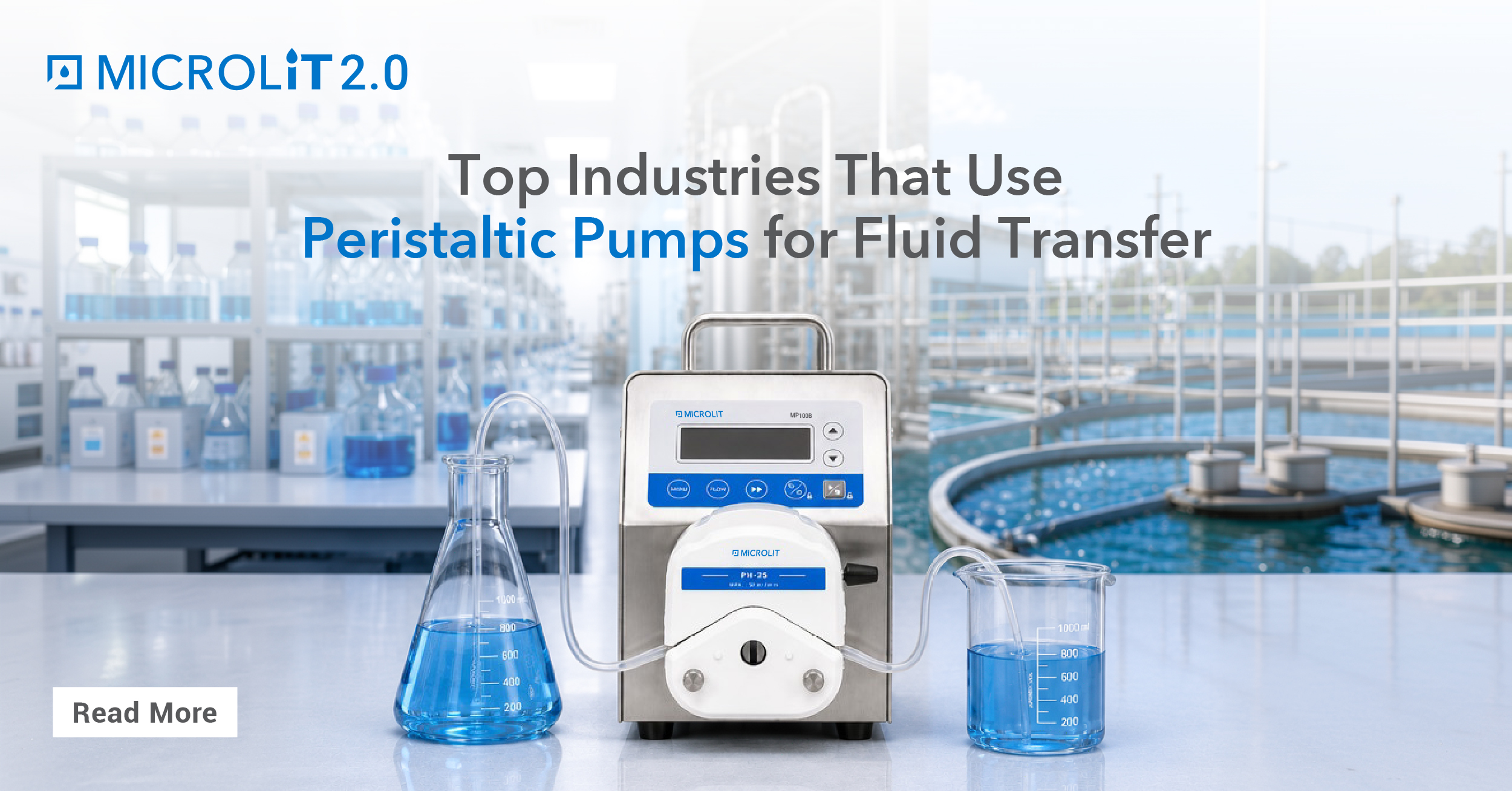
Fluid transfer is a critical process across countless industries. Whether moving highly sensitive biological samples, dosing chemicals into a production line, transferring food ingredients, or handling wastewater treatment chemicals, businesses require reliable technologies that can maintain process efficiency while protecting product quality.
As industrial processes become increasingly automated and quality standards continue to rise, peristaltic pumps have become a preferred fluid handling solution across a wide range of sectors. Their versatility, adaptability, and ability to handle diverse fluids make them valuable assets in both laboratory and industrial environments.
This article explores the top industries that rely on peristaltic pumps and the key applications driving their adoption.
Why Industry Demands Are Changing
Modern industries face growing pressure to improve:
- Product quality
- Operational efficiency
- Process automation
- Workplace safety
- Regulatory compliance
- Resource utilization
Fluid handling systems play a crucial role in achieving these goals. As a result, organizations are increasingly seeking pumping technologies that can adapt to changing production requirements while minimizing maintenance and operational disruptions.
Peristaltic pumps have emerged as a preferred choice because they offer flexibility across a wide range of applications and fluid types.
-
Pharmaceutical Manufacturing
The pharmaceutical industry remains one of the largest users of peristaltic pumps.
Precision fluid transfer is essential throughout the pharmaceutical production process, from drug development and formulation to commercial manufacturing.
Typical applications include:
- Liquid filling
- Buffer preparation
- Reagent dosing
- Vaccine production
- API transfer
- Sterile fluid handling
- Process feeding
- Cleaning and sanitization systems
The industry’s strict quality standards require highly reliable fluid handling systems capable of supporting regulated manufacturing environments.
As pharmaceutical companies continue to invest in biologics, vaccines, and advanced therapies, demand for precise fluid transfer solutions continues to grow.
-
Biotechnology and Life Sciences
Biotechnology applications often involve highly valuable materials that require careful handling throughout the production process.
Organizations operating in this sector commonly use peristaltic pumps for:
- Cell culture operations
- Fermentation processes
- Media transfer
- Nutrient feeding
- Bioreactor support
- Protein production
- Genetic research
- Bioprocess development
The ability to support both laboratory-scale research and large-scale manufacturing makes these pumps particularly valuable within biotechnology facilities.
As global investments in biotechnology continue to increase, fluid handling systems are becoming increasingly important to support innovation and scalability.
-
Food and Beverage Processing
Food manufacturers require equipment that supports product consistency, hygiene, and production efficiency.
Peristaltic pumps are widely used for transferring and dosing:
- Flavorings
- Syrups
- Concentrates
- Dairy ingredients
- Food additives
- Nutritional supplements
- Colorants
- Liquid ingredients
Many food production processes involve fluids with varying viscosities and sensitivities. Accurate dosing helps manufacturers maintain product quality while reducing ingredient waste.
The growing demand for processed foods, functional beverages, and specialty ingredients continues to expand the need for advanced fluid transfer technologies.
-
Chemical Processing Industry
The chemical sector frequently handles aggressive substances that require specialized equipment.
Applications include:
- Chemical dosing
- Acid transfer
- Alkali handling
- Catalyst feeding
- Solvent transfer
- Polymer processing
- Additive injection
Chemical manufacturers often operate in demanding environments where reliability and process continuity are critical. Fluid handling systems must be capable of supporting production efficiency while maintaining safe operations.
As industries focus on improving sustainability and process optimization, accurate dosing systems play an increasingly important role in reducing chemical consumption and waste.
-
Water and Wastewater Treatment
Municipal and industrial water treatment facilities rely heavily on precise chemical dosing systems to maintain water quality and meet environmental regulations.
Common applications include:
- Chlorination
- pH adjustment
- Coagulant dosing
- Flocculant dosing
- Sludge treatment
- Nutrient control
- Disinfection processes
Water treatment operators require dependable fluid handling solutions capable of operating continuously while maintaining accurate dosing performance.
With increasing global focus on water conservation and environmental protection, treatment facilities continue to invest in modern dosing technologies.
-
Environmental Testing Laboratories
Environmental laboratories play a vital role in monitoring water, soil, and air quality.
These facilities commonly utilize peristaltic pumps for:
- Sample preparation
- Analytical testing
- Water quality analysis
- Environmental monitoring
- Research projects
- Laboratory automation
As governments worldwide strengthen environmental regulations, demand for reliable analytical equipment continues to grow.
Fluid handling accuracy directly impacts testing reliability and analytical performance.
-
Clinical Diagnostics and Healthcare
Diagnostic laboratories require highly controlled fluid handling for accurate test results and efficient workflows.
Applications include:
- Reagent dispensing
- Sample processing
- Diagnostic workflows
- Clinical testing
- Laboratory automation
- Instrument integration
The increasing demand for healthcare services, molecular diagnostics, and point-of-care testing is driving investment in advanced laboratory technologies.
Reliable fluid transfer remains a key component of modern diagnostic operations.
-
Academic and Research Institutions
Universities, research centers, and government laboratories use peristaltic pumps across a broad range of scientific disciplines.
Common research applications include:
- Chemical analysis
- Biological studies
- Process development
- Materials research
- Pilot plant projects
- Educational laboratories
Researchers often require flexible systems capable of supporting diverse experimental requirements while maintaining accuracy and repeatability.
As global research investments continue to increase, demand for versatile laboratory equipment remains strong.
-
Cosmetics and Personal Care Manufacturing
The cosmetics industry depends on precise formulation and ingredient dosing to ensure product consistency.
Applications include:
- Lotion production
- Cream formulation
- Fragrance dosing
- Cosmetic ingredient transfer
- Personal care product manufacturing
As consumers increasingly demand premium products with consistent quality, manufacturers continue to invest in technologies that improve production accuracy.
-
Agriculture and Fertilizer Industry
Agricultural businesses and fertilizer manufacturers utilize fluid transfer systems for various production and dosing applications.
Typical uses include:
- Fertilizer dosing
- Nutrient preparation
- Agricultural chemical transfer
- Research and development
- Irrigation treatment systems
The growing emphasis on sustainable agriculture and precision farming is driving demand for accurate dosing technologies that improve resource utilization.
Emerging Industries Driving Future Growth
Several emerging sectors are expected to generate significant demand for fluid transfer technologies in the coming years.
These include:
-
Cell and Gene Therapy
Advanced therapies require highly controlled manufacturing environments and precise fluid handling systems.
-
Sustainable Manufacturing
Green chemistry initiatives increasingly rely on accurate dosing systems to optimize resource usage and reduce waste.
-
Laboratory Automation
Automated laboratories require dependable fluid transfer systems that can integrate with digital workflows and robotic platforms.
-
Advanced Diagnostics
Growing demand for rapid and decentralized testing solutions continues to expand the need for precision laboratory equipment.
Why Industry Leaders Choose Microlit Peristaltic Pumps
Microlit’s range of Peristaltic Pumps is designed to support the evolving needs of laboratories, research facilities, and industrial operations worldwide.
Engineered for reliability and precision, Microlit Peristaltic Pumps offer:
- Accurate flow control
- Variable speed operation
- Wide tubing compatibility
- Support for diverse fluid types
- Easy tube replacement
- Low maintenance requirements
- Continuous operation capability
- User-friendly interfaces
Whether supporting pharmaceutical production, biotechnology research, food manufacturing, water treatment, or chemical processing, Microlit Peristaltic Pumps provide dependable fluid handling solutions that help organizations improve productivity and process consistency.
Conclusion
Fluid transfer is at the heart of countless industrial and laboratory processes. From pharmaceutical manufacturing and biotechnology research to food production, environmental testing, and water treatment, peristaltic pumps have become indispensable tools for modern operations.
As industries continue to prioritize quality, efficiency, automation, and sustainability, demand for reliable fluid handling technologies will only increase. By selecting the right solution, organizations can enhance process performance, reduce operational risks, and support long-term growth.
Microlit Peristaltic Pumps are engineered to meet these evolving requirements, delivering precision, reliability, and flexibility across a wide range of applications and industries.