Vacuum Aspirator Common Problems & Troubleshooting Tips
- July 9, 2026
- ENQUIRE NOW
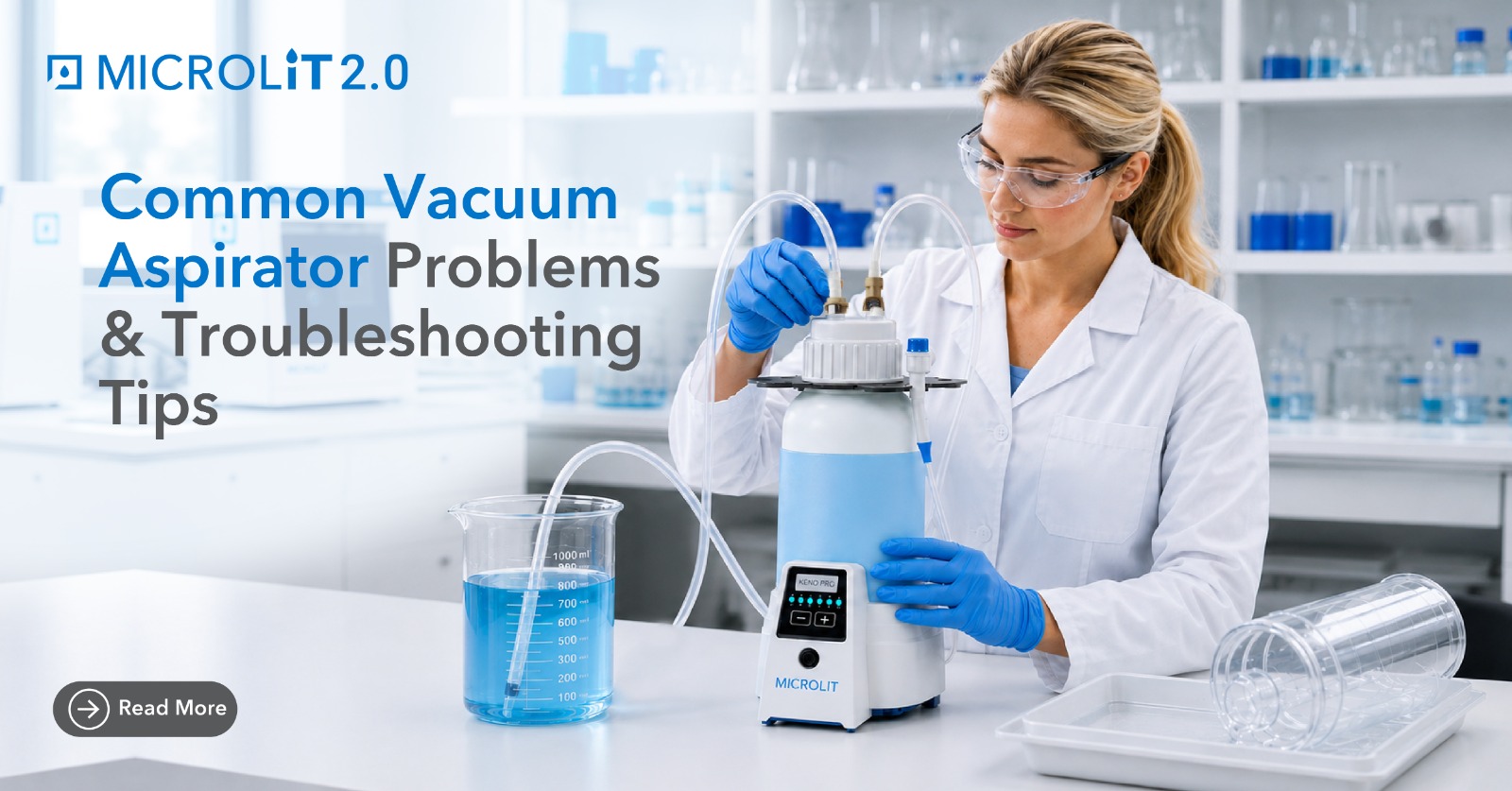
A vacuum aspirator is one of the most frequently used instruments in modern laboratories. Whether you’re performing cell culture work, removing supernatants, aspirating media, or handling biological waste, a reliable vacuum aspirator ensures faster workflows, improved safety, and cleaner bench operations.
However, like any laboratory instrument, a vacuum aspirator can occasionally face performance issues. The good news is that most problems can be resolved with simple troubleshooting and regular maintenance.
In this guide, we’ll discuss the most common vacuum aspirator problems, their causes, and practical solutions to keep your laboratory running smoothly.
-
Weak or No Suction
Possible Causes
- Collection bottle is full.
- Tubing is kinked or blocked.
- Loose tubing connections.
- Pump settings are too low.
- Filter is clogged.
Troubleshooting Tips
- Empty the collection bottle before it reaches maximum capacity.
- Inspect all tubing for bends, cracks, or blockages.
- Ensure tubing connections are firmly secured.
- Increase the suction level if your aspirator supports adjustable vacuum.
- Replace hydrophobic filters regularly to maintain airflow.
Pro Tip: Never continue operating with a saturated filter—it significantly reduces suction efficiency.
-
Inconsistent Vacuum Pressure
Possible Causes
- Air leakage in tubing.
- Worn-out seals.
- Damaged connectors.
- Vacuum regulator incorrectly adjusted.
Troubleshooting Tips
- Check every tubing connection.
- Replace damaged tubing immediately.
- Inspect bottle caps and seals for wear.
- Adjust vacuum settings according to your application.
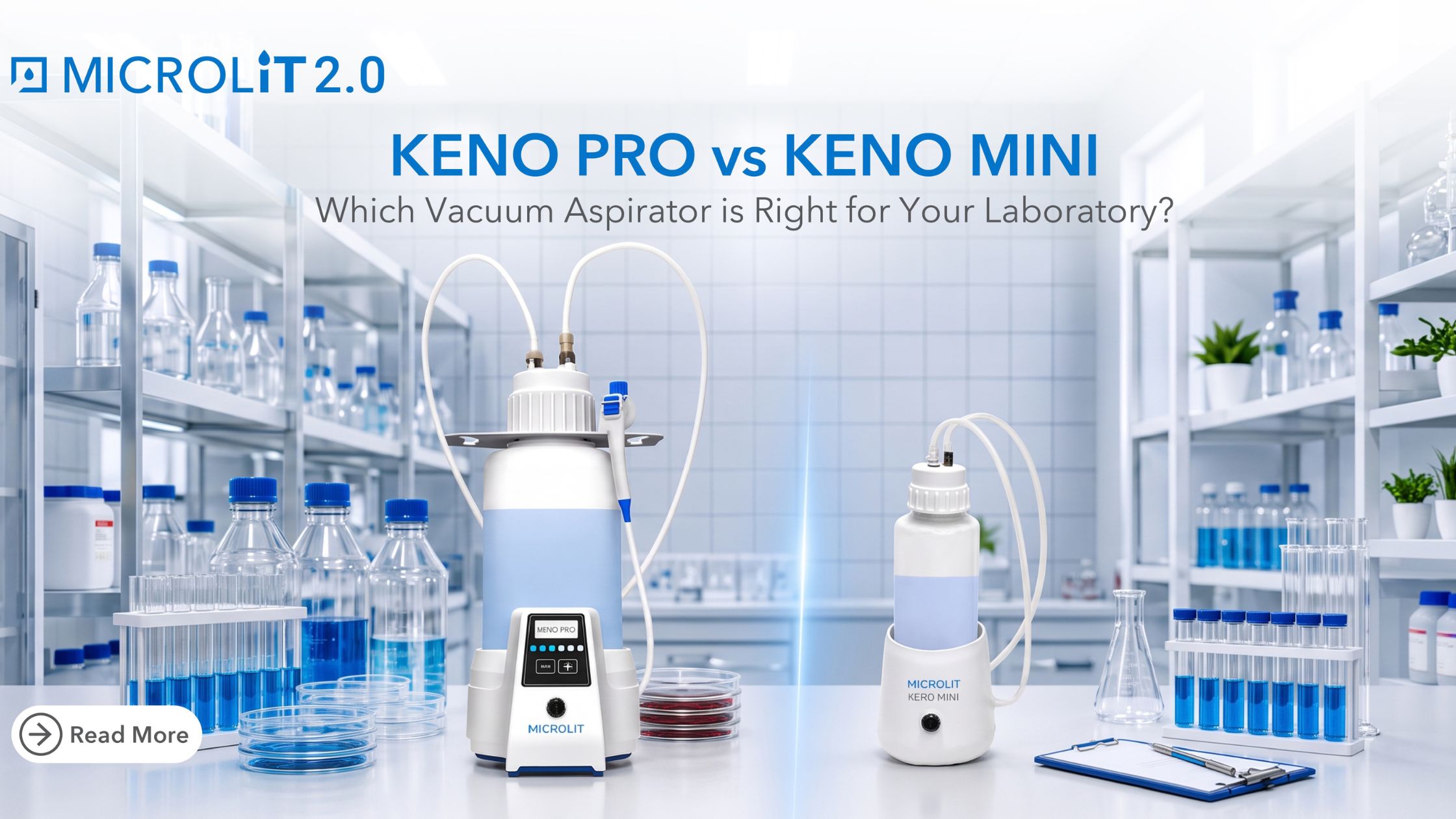
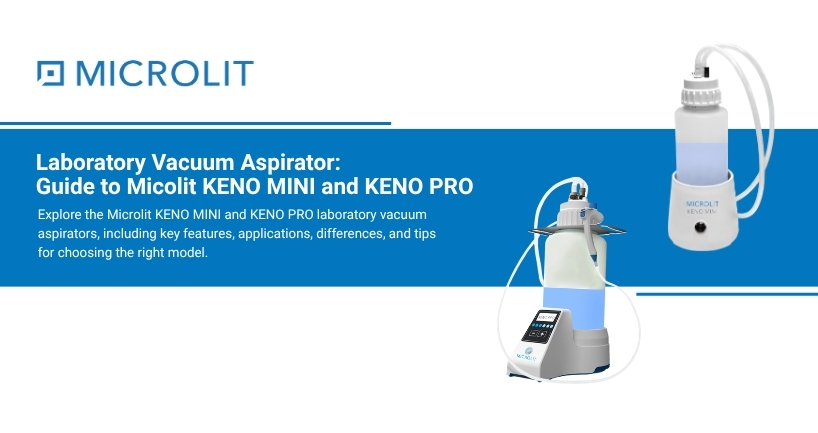
Modern aspirators like the MICROLIT KENO Vacuum Aspirator provide stable suction control for consistent performance across various laboratory applications.
-
Excessive Noise During Operation
Possible Causes
- Pump running continuously at maximum speed.
- Internal wear.
- Instrument placed on an unstable surface.
- Dust accumulation around ventilation openings.
Troubleshooting Tips
- Ensure the aspirator is positioned on a flat, vibration-free bench.
- Clean ventilation openings regularly.
- Inspect for loose components.
- Use energy-efficient operating modes when available.
Features like Eco-Control intelligently optimize pump performance based on application requirements, helping reduce unnecessary noise while maintaining efficient suction.
-
Liquid Entering the Pump
Possible Causes
- Overfilled collection bottle.
- Missing or damaged overflow protection.
- Incorrect tubing installation.
Troubleshooting Tips
- Never fill the bottle beyond the recommended level.
- Always use overflow protection systems.
- Check tubing orientation before operation.
- Replace contaminated filters immediately.
Preventing liquid from entering the pump significantly extends the instrument’s service life.
-
Frequent Filter Blockage
Possible Causes
- High particulate samples.
- Aerosol contamination.
- Moisture accumulation.
Troubleshooting Tips
- Replace filters according to laboratory usage.
- Avoid aspirating excessive foam.
- Use appropriate waste collection bottles.
- Clean surrounding tubing periodically.
Regular filter replacement improves both suction performance and biosafety.
-
Battery Backup Issues (Portable Aspirators)
Possible Causes
- Battery not fully charged.
- Aging battery.
- Improper charging habits.
Troubleshooting Tips
- Fully charge before first use.
- Avoid complete battery discharge repeatedly.
- Use only manufacturer-approved chargers.
- Replace batteries after recommended service life.
Portable vacuum aspirators with lithium-ion batteries provide extended cordless operation when maintained properly.
-
Slow Aspiration Speed
Possible Causes
- Low vacuum setting.
- Narrow or incompatible tubing.
- Partial blockage.
Troubleshooting Tips
- Increase suction gradually.
- Select tubing compatible with your application.
- Flush tubing with distilled water after use.
- Clean adapters and aspiration tips regularly.
-
Cross-Contamination Concerns
Possible Causes
- Reusing contaminated tubing.
- Poor waste disposal practices.
- Infrequent cleaning.
Troubleshooting Tips
- Disinfect bottles after each experiment.
- Replace disposable aspiration tips.
- Clean reusable accessories using recommended disinfectants.
- Always use hydrophobic filters.
Maintaining cleanliness is especially critical during microbiology, molecular biology, and cell culture applications.
-
Pump Overheating
Possible Causes
- Continuous operation for extended periods.
- Blocked ventilation.
- High ambient temperature.
Troubleshooting Tips
- Allow cooling intervals during heavy workloads.
- Keep air vents unobstructed.
- Avoid placing equipment near heat sources.
Modern intelligent aspirators reduce unnecessary pump load by automatically adjusting performance according to demand.
-
Difficulty Removing Different Liquids
Different laboratory liquids behave differently.
For example:
- Cell culture media
- Viscous buffers
- Biological samples
- Saline solutions
- Chemical reagents
Using incorrect suction settings may cause splashing or inefficient aspiration.
Best Practices
- Adjust suction according to sample type.
- Use suitable aspiration adapters.
- Practice with water before handling valuable samples.
Preventive Maintenance Checklist
A few minutes of routine maintenance can significantly increase the lifespan of your vacuum aspirator.
Daily
- Empty waste bottle.
- Inspect tubing.
- Wipe instrument exterior.
- Check vacuum level.
Weekly
- Clean bottle thoroughly.
- Inspect filters.
- Check tubing connections.
- Verify suction consistency.
Monthly
- Replace worn tubing.
- Replace hydrophobic filters if necessary.
- Inspect seals and connectors.
- Test overall performance.
Features That Reduce Common Vacuum Aspirator Problems
When selecting a vacuum aspirator, look for features that help minimize operational issues:
- Adjustable vacuum control
- Overflow protection
- Hydrophobic filters
- Easy-to-clean waste bottle
- Portable cordless operation
- Stable suction performance
- Energy-efficient operation
- Simple maintenance
- Ergonomic design
The MICROLIT KENO Vacuum Aspirator incorporates several of these user-focused features, including Eco-Control technology, which intelligently adjusts pump performance based on application requirements. This not only helps reduce noise and energy consumption but also contributes to longer pump life and a more comfortable laboratory environment. Its compact design, stable suction, easy maintenance, and safety-focused construction make it suitable for laboratories handling routine aspiration tasks.
Conclusion
A vacuum aspirator is a small instrument that performs a critical role in laboratory workflows. Most operational issues stem from routine wear, improper maintenance, or incorrect usage—and fortunately, they’re usually easy to prevent.
By following simple maintenance practices, replacing consumables on time, and selecting an aspirator equipped with intelligent features, laboratories can ensure reliable performance, improve user safety, and minimize downtime.
Whether you’re working in pharmaceuticals, biotechnology, molecular biology, diagnostics, academic research or clinical laboratories, keeping your vacuum aspirator in top condition ensures every aspiration task is faster, safer, and more efficient.
A well-maintained vacuum aspirator doesn’t just improve productivity—it supports better science every day.