How Viscosity Affects Fluid Transfer Accuracy: Why Choosing the Right Liquid Handling Equipment Matters
- July 6, 2026
- ENQUIRE NOW
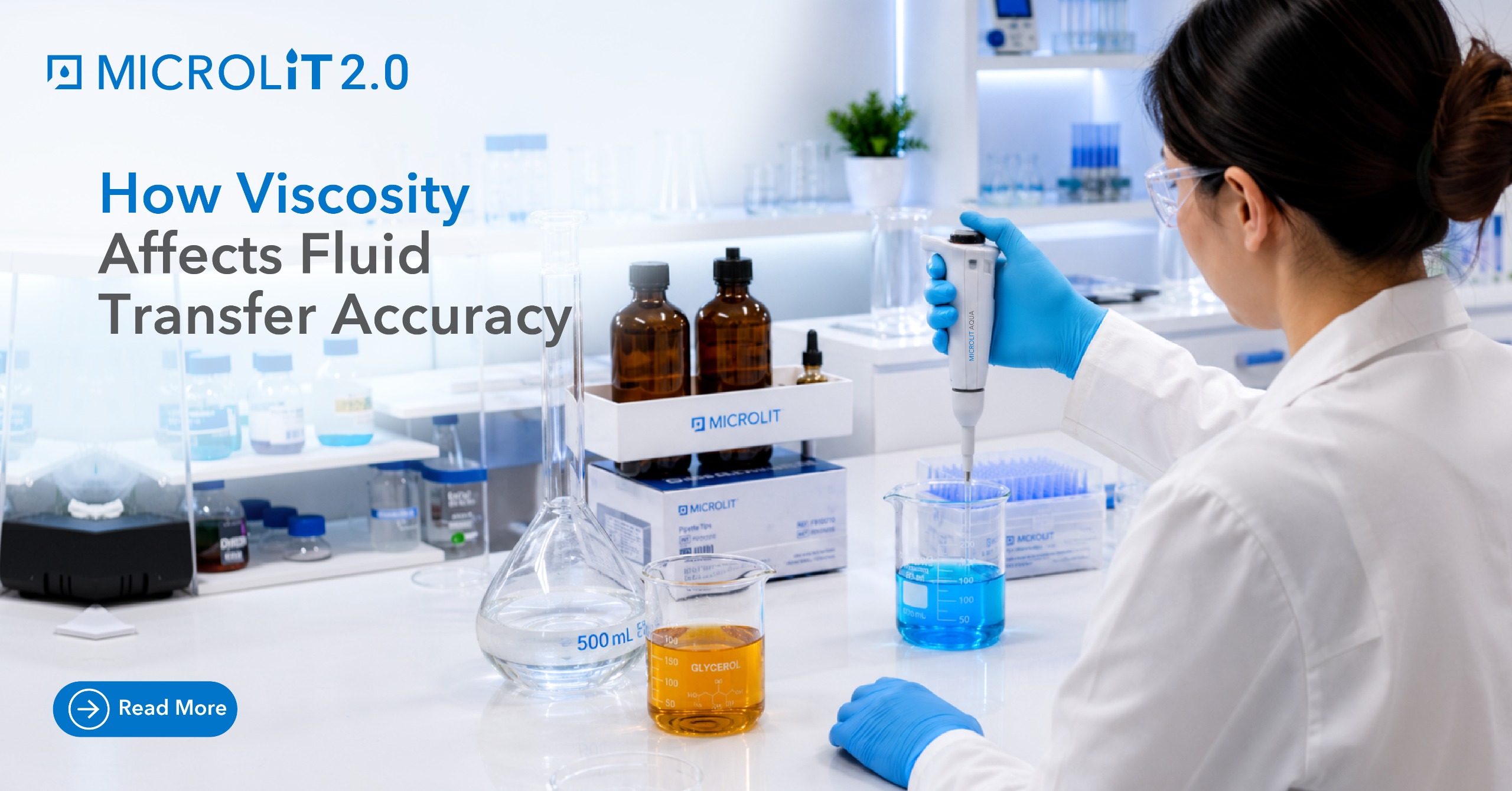
In laboratories and industrial settings, accurate fluid transfer is critical for producing reliable results, maintaining product quality, and ensuring process consistency. However, one often-overlooked factor that significantly influences dispensing and transfer performance is viscosity.
From water-like solutions to highly viscous liquids such as glycerol, oils, syrups, buffers, and certain reagents, every liquid behaves differently during transfer. Using the wrong liquid handling instrument or technique can lead to inaccurate volumes, air bubbles, incomplete dispensing, and inconsistent experimental outcomes.
Understanding how viscosity affects fluid transfer accuracy is essential for selecting the right equipment. Whether you’re working with a micropipette, bottle top dispenser, electronic pipette, or peristaltic pump, choosing the appropriate solution can greatly improve precision and efficiency.
What is Viscosity?
Viscosity is the measure of a liquid’s resistance to flow. Simply put, it describes how “thick” or “thin” a liquid is.
Low-viscosity liquids flow easily, while high-viscosity liquids move much more slowly.
Some common examples include:
Low Viscosity
- Water
- Ethanol
- Methanol
- Acetone
Medium Viscosity
- Buffers
- Mild detergents
- Culture media
High Viscosity
- Glycerol
- Oils
- Syrups
- Liquid polymers
- Certain pharmaceutical formulations
As viscosity increases, accurately aspirating and dispensing liquids becomes increasingly challenging.
Why Does Viscosity Affect Fluid Transfer?
Most laboratory liquid handling instruments are designed based on predictable liquid movement. Highly viscous liquids behave differently because they resist movement and flow more slowly.
This affects nearly every stage of fluid transfer, including:
- Aspiration
- Dispensing
- Flow rate
- Residual liquid retention
- Tip emptying
- Repeatability
If these factors aren’t considered, laboratories may experience volume inaccuracies and reduced experimental reproducibility.
Common Challenges When Handling Viscous Liquids
- Slow Aspiration
Highly viscous liquids require more time to enter the pipette tip or dispensing system. Rapid aspiration often traps air bubbles, resulting in inaccurate liquid volumes.
- Incomplete Dispensing
Unlike water, viscous liquids tend to cling to the inner walls of tips or tubing.
This leaves residual liquid behind, causing lower-than-intended dispensing volumes.
- Air Bubble Formation
Fast pipetting of thick liquids frequently introduces air bubbles.
Air pockets reduce dispensing accuracy and affect repeatability during serial transfers.
- Higher Dispensing Force
Manual liquid handling becomes more physically demanding as viscosity increases.
Repeated dispensing can contribute to hand fatigue and reduce operator comfort.
- Reduced Repeatability
Since viscous liquids flow inconsistently, variations between successive transfers become more likely if proper techniques and instruments are not used.
How Different Liquid Handling Instruments Perform
Different laboratory instruments are optimized for different liquid characteristics.
Understanding their strengths helps improve accuracy.
Micropipettes
Air displacement micropipettes work exceptionally well for aqueous solutions but require careful technique when handling viscous samples.
For best results:
- Aspirate slowly
- Dispense slowly
- Use reverse pipetting when appropriate
- Allow sufficient aspiration time
- Use high-quality compatible pipette tips
The Microlit NERO® Micropipette incorporates μAir® Technology to minimize dead air space, improving dispensing consistency and user comfort. Combined with its patented UniCal® Technology for simplified calibration, it delivers dependable performance across a wide range of laboratory applications.
Electronic Pipettes
Electronic pipettes help standardize aspiration and dispensing speeds, reducing user-to-user variation.
The Microlit AQUA Electronic Pipette offers multiple dispensing modes with programmable speed control, making it particularly useful for repetitive liquid handling tasks involving liquids with varying viscosities. Consistent motor-driven operation helps improve repeatability while reducing operator fatigue.
Bottle Top Dispensers
Laboratories frequently dispense viscous acids, alkalis, and solvents directly from reagent bottles.
The Microlit BEATUS Bottle Top Dispenser is engineered for smooth and reliable reagent dispensing with excellent chemical compatibility and ergonomic operation, making routine laboratory workflows safer and more efficient.
Peristaltic Pumps
For continuous or repeated transfer of viscous fluids, peristaltic pumps are often the preferred solution.
Unlike piston-based systems, peristaltic pumps move liquids through flexible tubing using rotating rollers. Since only the tubing comes into contact with the fluid, contamination risks are minimized while maintaining gentle, controlled flow.
The Microlit Peristaltic Pump offers adjustable flow rates, precise fluid transfer, and compatibility with a broad range of laboratory liquids. It is ideal for pharmaceutical manufacturing, biotechnology, media preparation, buffer transfer, and other applications where handling liquids of different viscosities is essential.
Best Practices for Handling Viscous Liquids
Choosing the right instrument is only part of the solution. Following proper liquid handling techniques further improves accuracy.
Pipette Slowly
Rapid aspiration causes turbulence and air bubble formation.
A slower aspiration speed allows viscous liquids to fill the tip uniformly.
Pause Before Dispensing
Allowing the liquid to stabilize inside the tip before dispensing helps improve volume accuracy.
Use Reverse Pipetting
Reverse pipetting leaves a small excess volume inside the tip, improving dispensing accuracy for viscous or foaming liquids.
Select the Correct Pipette Tips
Poorly fitting or low-quality tips may introduce leakage or inconsistent aspiration.
Always use high-quality compatible tips recommended by the manufacturer.
Maintain Calibration
Regular pipette calibration ensures accurate dispensing regardless of liquid type.
Routine maintenance is especially important when instruments are frequently used with viscous reagents.
Industry Applications Where Viscosity Matters
Accurate handling of viscous liquids is essential across many industries.
Pharmaceutical Manufacturing
Formulations often contain syrups, suspensions, gels, and active pharmaceutical ingredients requiring precise dosing.
Biotechnology
Cell culture media supplements, proteins, enzymes, and concentrated buffers may exhibit varying viscosities.
Clinical Diagnostics
Diagnostic reagents require consistent dispensing for reliable test performance.
Food & Beverage
Flavorings, syrups, oils, and additives demand accurate transfer to maintain product quality.
Chemical Laboratories
Resins, polymers, detergents, and specialty chemicals often require specialized liquid handling equipment.
Choosing the Right Microlit Solution
Every laboratory has unique liquid handling requirements.
Microlit offers a comprehensive portfolio designed to improve fluid transfer accuracy across different applications.
- Microlit NERO® Micropipettes for precise everyday pipetting with patented UniCal® Technology and μAir® Technology.
- Microlit AQUA Electronic Pipettes for programmable, repeatable dispensing with reduced manual effort.
- Microlit BEATUS Bottle Top Dispensers for safe and accurate reagent dispensing directly from bottles.
- Microlit Peristaltic Pumps for precise, contamination-free transfer of fluids across a wide viscosity range with adjustable flow control.
By selecting the right instrument for each application, laboratories can improve productivity, reduce errors, and achieve consistent results.
Conclusion
Viscosity plays a crucial role in determining the accuracy of fluid transfer. As liquids become thicker, they behave differently during aspiration and dispensing, increasing the likelihood of volume errors, residual liquid retention, and inconsistent results.
Fortunately, these challenges can be overcome with the right techniques and liquid handling equipment. Slow aspiration, proper pipetting practices, routine calibration, and selecting instruments designed for specific applications all contribute to more reliable outcomes.
Whether you’re transferring aqueous solutions with a Microlit NERO® Micropipette, performing repetitive dispensing using the Microlit AQUA Electronic Pipette, handling reagents with the Microlit BEATUS Bottle Top Dispenser, or moving viscous fluids using a Microlit Peristaltic Pump, choosing the appropriate solution ensures greater precision, improved efficiency, and confidence in every transfer.
In modern laboratories, understanding viscosity isn’t just about fluid properties—it’s about making smarter equipment choices that support accurate science, reproducible research, and better operational performance.