Laboratory Micropipette Buying Guide: How to Choose the Right Micropipette for Your Laboratory
- August 27, 2026
- ENQUIRE NOW
A micropipette is one of the most frequently used pieces of laboratory equipment in research, diagnostic, pharmaceutical, biotechnology and academic laboratories. From transferring reagents and preparing samples to performing PCR, ELISA and molecular biology workflows, precise liquid handling is essential for obtaining reliable and reproducible results.
With numerous brands, models, volume ranges and configurations available, choosing the right laboratory micropipette can sometimes be challenging. While micropipette price is an important consideration, it should not be the only factor influencing your purchase.
This micropipette buying guide explains the key factors to consider before purchasing a micropipette and how to select one that matches your laboratory’s applications, workflow and budget.
What Is a Laboratory Micropipette?
A laboratory micropipette is a precision liquid-handling instrument designed to aspirate and dispense small volumes of liquid, typically in the microlitre range.
Micropipettes are widely used in:
- Molecular biology
- Microbiology
- Biotechnology
- Pharmaceutical research
- Clinical diagnostics
- Food and beverage testing
- Chemical laboratories
- Academic research
- Cell culture
- Quality control laboratories
Depending on the application, laboratories can choose from single-channel, multichannel, fixed-volume, variable-volume and electronic micropipettes.
The right choice depends largely on the volume, liquid type, throughput and level of precision required.
Why Choosing the Right Micropipette Matters
Liquid handling errors can affect reagent concentrations, sample preparation and downstream experimental results.
A micropipette that is poorly matched to the application may lead to inconsistent volume delivery, unnecessary reagent wastage or operator discomfort.
The right laboratory micropipette should provide an appropriate balance of:
- Accuracy
- Precision
- Ergonomics
- Ease of operation
- Volume flexibility
- Tip compatibility
- Calibration
- Durability
- Serviceability
Therefore, buying a micropipette should be viewed as an investment in the reliability of the laboratory’s overall workflow.
-
Determine the Required Volume Range
The first step in any micropipette buying guide is identifying the volumes your laboratory handles most frequently.
Micropipettes are available in different volume ranges, and selecting a pipette that closely matches your working volume can improve liquid handling performance.
For example, a laboratory may need different pipettes for:
- Very low-volume transfers
- Routine sample preparation
- Reagent preparation
- PCR setup
- Larger-volume liquid transfers
Avoid selecting a single micropipette simply because it covers the widest possible range. A set of appropriately sized pipettes can often provide better flexibility and performance.
-
Single-Channel or Multichannel?
Your workflow should determine whether you need a single-channel or multichannel pipette.
Single-Channel Micropipettes
Single-channel pipettes are ideal for transferring liquids between individual tubes, containers and wells.
They are commonly used for sample preparation, reagent transfer and general laboratory procedures.
Multichannel Micropipettes
Multichannel pipettes allow several samples to be transferred simultaneously. They are particularly useful for microplate-based applications such as:
- PCR
- qPCR
- ELISA
- Sample dilution
- High-throughput screening
If your laboratory processes large numbers of samples, a multichannel micropipette can significantly reduce repetitive pipetting.
-
Mechanical vs Electronic Micropipettes
Another important decision is choosing between a mechanical and electronic micropipette.
Mechanical Micropipettes
Mechanical pipettes are widely used because they are simple, reliable and versatile. They are suitable for everyday liquid handling and are available in a broad range of volumes and configurations.
Electronic Micropipettes
Electronic models use motor-driven mechanisms to control aspiration and dispensing. Depending on the model, they may offer programmable modes, repetitive dispensing and other functions.
They can be particularly useful for:
- High-throughput workflows
- Repetitive pipetting
- Microplate preparation
- Serial dispensing
- Applications requiring controlled pipetting
For laboratories performing repetitive operations, an electronic pipette can improve convenience and potentially reduce manual effort.
-
Accuracy and Precision
Accuracy and precision are among the most important specifications when evaluating a laboratory micropipette.
Accuracy refers to how close the delivered volume is to the intended volume.
Precision refers to how consistently the pipette delivers the same volume over repeated measurements.
When comparing models, don’t look only at the maximum volume. Examine the manufacturer’s accuracy and precision specifications at the volumes your laboratory actually uses.
For critical applications, also consider calibration requirements and the applicable standards for your laboratory.
-
Ergonomics and User Comfort
A pipette may be used hundreds of times during a typical working day. Consequently, ergonomics should be considered alongside technical specifications.
Look for features such as:
- Comfortable grip
- Smooth volume adjustment
- Low operating force
- Convenient tip ejection
- Balanced weight
- Easy-to-read volume display
A comfortable pipette can make repetitive laboratory work easier and may help reduce unnecessary hand fatigue.
When comparing laboratory equipment, ergonomics is often overlooked because it is harder to quantify than specifications such as volume range or accuracy. However, it can have a significant impact on everyday usability.
-
Calibration and Maintenance
A micropipette needs appropriate calibration and maintenance to continue performing reliably.
Before purchasing, find out:
- How the pipette is calibrated
- How frequently calibration should be performed
- Whether adjustment is straightforward
- Where calibration services are available
- Whether spare parts are accessible
- What maintenance is recommended
Some modern micropipettes incorporate technologies designed to simplify calibration and adjustment.
For example, MICROLIT NERO features patented UniCal® Technology, designed to simplify micropipette calibration and adjustment.
Considering calibration at the time of purchase can help laboratories manage the complete lifecycle of their equipment rather than focusing only on the initial purchase.
-
Check Pipette Tip Compatibility
A pipette does not work independently of its tip.
Tip fit, quality and compatibility can influence liquid handling performance. Before buying a micropipette, determine which tips are recommended and whether they are readily available.
Also consider:
- Tip cost
- Tip availability
- Filter-tip options
- Low-retention options
- Compatibility with other pipettes
- Packaging and sterility requirements
For laboratories using multiple brands, universal tip compatibility can help simplify inventory management.
-
Consider the Type of Liquid
Not every liquid behaves in the same way.
Water-like liquids are generally easier to pipette than viscous, volatile, foaming or high-density liquids.
If your laboratory regularly handles challenging liquids, look for pipettes and techniques appropriate for those applications.
Factors such as tip design, pipetting technique and aspiration/dispensing speed can influence performance.
Your laboratory micropipette should therefore be selected according to the liquids you actually work with—not simply the volumes involved.
-
How Much Does a Micropipette Cost?
Micropipette price can vary significantly depending on the brand, volume range, configuration, channel count and technology.
A basic mechanical single-channel pipette will generally have a different price point from a multichannel or advanced electronic model.
When comparing prices, consider:
- Initial purchase price
- Pipette tips
- Calibration costs
- Maintenance
- Spare parts
- Service support
- Expected operating life
- Downtime
- User productivity
The cheapest micropipette is not necessarily the most economical choice in the long term.
A better approach is to evaluate total cost of ownership.
For example, a slightly higher initial investment may be justified if the pipette offers better ergonomics, easier calibration, longer service life or improved productivity.
-
Evaluate the Manufacturer and Service Support
The manufacturer is another important part of the purchasing decision.
When evaluating different laboratory equipment brands, consider their:
- Product expertise
- Manufacturing capabilities
- Quality certifications
- Calibration support
- Technical assistance
- Spare parts availability
- Warranty
- After-sales service
- Distribution network
Local service availability can be particularly valuable because it can reduce downtime and simplify maintenance.
MICROLIT: Choosing a Laboratory Micropipette
MICROLIT offers a portfolio of mechanical and electronic liquid handling solutions for laboratories.
Its micropipette portfolio includes NERO, RAMBO and AQUA, covering different requirements across routine and advanced liquid handling workflows.
MICROLIT NERO incorporates patented UniCal® Technology, designed to simplify micropipette calibration and adjustment.
MICROLIT AQUA is a multifunctional electronic micropipette designed for advanced liquid handling applications, with single-channel and multichannel configurations.
MICROLIT RAMBO provides another option for routine mechanical pipetting applications.
This range allows laboratories to select equipment based on application, volume, throughput and workflow requirements rather than adopting a one-size-fits-all approach.
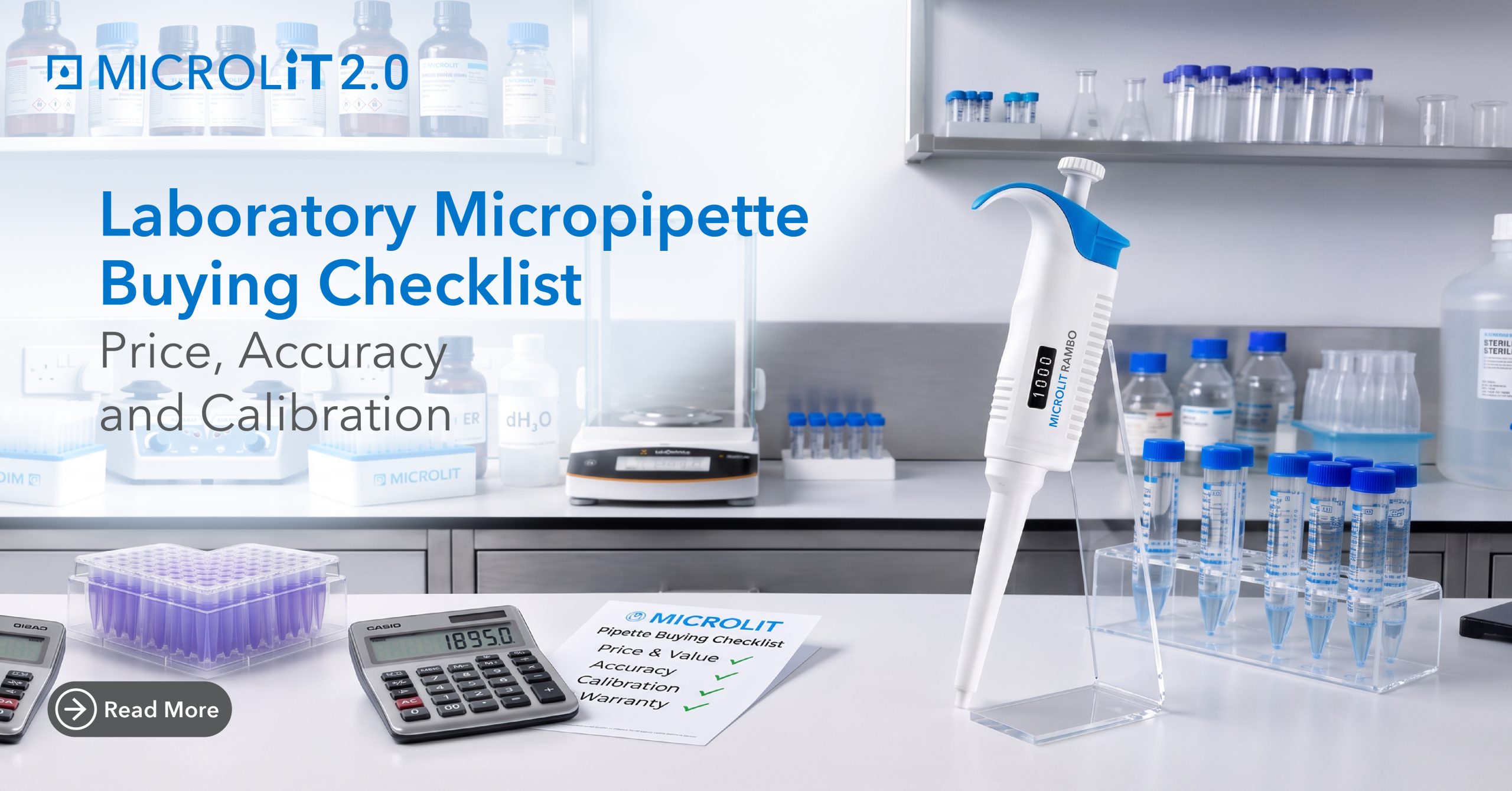
Laboratory Micropipette Buying Checklist
Before purchasing, use this simple checklist:
☐ What volume range do I need?
☐ Do I need single-channel or multichannel?
☐ Should I choose mechanical or electronic?
☐ What accuracy and precision do I require?
☐ What liquids will I handle?
☐ Which pipette tips are compatible?
☐ How will the pipette be calibrated?
☐ Is local service available?
☐ What is the total cost of ownership?
☐ Does the manufacturer provide appropriate technical support?
Answering these questions can make the purchasing decision much easier.
A micropipette may be a small piece of laboratory equipment, but its impact on experimental accuracy can be significant.
The right laboratory micropipette should match your volume requirements, application, workflow and user needs. While micropipette price is an important consideration, accuracy, precision, ergonomics, calibration, tip compatibility, maintenance and after-sales support should also be evaluated.
Whether you are setting up a new laboratory, replacing existing equipment or expanding your liquid handling capabilities, this micropipette buying guide can help you make a more informed decision.
Don’t choose a micropipette simply because it fits your budget. Choose one that fits your workflow, application and long-term laboratory requirements.
Because in precision liquid handling, the right equipment makes every microlitre count.