Fluid Transfer Solutions for Chemical Laboratories: Enhancing Accuracy, Safety and Efficiency
- July 4, 2026
- ENQUIRE NOW
Chemical laboratories are at the heart of innovation, research, quality control, and industrial development. Whether analyzing raw materials, developing new formulations, conducting routine testing, or ensuring compliance with industry standards, these laboratories depend heavily on accurate and reliable fluid transfer processes.
From dispensing corrosive chemicals and solvents to transferring reagents, buffers, and samples, effective liquid handling is essential for maintaining precision, improving safety, and ensuring reproducible results. Even minor inaccuracies during fluid transfer can lead to experimental errors, compromised product quality, increased reagent wastage, and safety risks.
As laboratory workflows become increasingly complex, modern chemical laboratories require advanced fluid transfer solutions that offer accuracy, efficiency, and user convenience. In this blog, we’ll explore the importance of fluid transfer in chemical laboratories, common challenges faced during liquid handling, and the equipment that helps laboratories achieve reliable and consistent results.
Why Fluid Transfer Matters in Chemical Laboratories
Every laboratory process involving liquids depends on accurate measurement and transfer. Whether preparing solutions, conducting titrations, performing analytical testing, or handling hazardous chemicals, the quality of the results often depends on the precision of liquid handling.
Accurate fluid transfer helps laboratories:
- Maintain experimental consistency
- Improve analytical accuracy
- Reduce reagent wastage
- Enhance workplace safety
- Ensure regulatory compliance
- Increase operational efficiency
- Support reproducible research outcomes
As laboratories continue to adopt more stringent quality standards, investing in reliable liquid handling systems has become increasingly important.
Common Fluid Transfer Challenges in Chemical Laboratories
While transferring liquids may appear straightforward, chemical laboratories frequently encounter challenges that can impact accuracy and workflow efficiency.
Handling Corrosive Chemicals
Many chemical laboratories work with acids, alkalis, solvents, and other aggressive chemicals. Manual pouring increases the risk of spills, exposure, and contamination.
Viscosity Variations
Different chemicals have different viscosities. Some liquids flow easily, while others are thicker and more difficult to transfer accurately.
Repetitive Dispensing Tasks
Routine laboratory work often involves dispensing the same volume repeatedly. Manual methods can lead to operator fatigue and inconsistencies over time.
Cross-Contamination Risks
Improper handling techniques or unsuitable equipment can result in contamination between samples and reagents.
Volume Accuracy Requirements
Many chemical analyses require highly accurate liquid volumes. Even small deviations can affect test results and quality control outcomes.
These challenges highlight the need for specialized fluid transfer solutions designed specifically for laboratory environments.
Essential Fluid Transfer Solutions for Chemical Laboratories
Modern laboratories utilize a range of instruments depending on the application, volume requirements, and chemical compatibility needs.
Micropipettes for Precise Liquid Handling
Micropipettes are among the most widely used tools in laboratories. They enable precise aspiration and dispensing of small liquid volumes required for analytical testing, sample preparation, and research applications.
High-quality micropipettes help laboratories achieve:
- Accurate volume transfer
- Excellent repeatability
- Reduced user fatigue
- Improved reproducibility
For chemical laboratories performing routine testing and analytical work, reliable micropipettes are fundamental to maintaining data integrity.
The Microlit NERO Micropipette is designed to provide precision and user comfort while supporting consistent liquid handling performance. Its patented UniCal® Technology simplifies calibration, helping laboratories maintain accuracy while minimizing downtime.
Electronic Pipettes for Enhanced Productivity
As laboratory workloads increase, electronic pipettes have become valuable tools for improving efficiency and reducing manual effort.
Unlike traditional manual pipettes, electronic pipettes automate aspiration and dispensing processes, resulting in:
- Consistent dispensing speeds
- Improved repeatability
- Reduced operator fatigue
- Faster workflow execution
- Enhanced accuracy during repetitive tasks
Chemical laboratories handling multiple samples daily often benefit from electronic liquid handling solutions.
The Microlit AQUA Electronic Pipette offers multiple dispensing modes and programmable operation, making it ideal for repetitive liquid transfer applications requiring both precision and efficiency.
Bottle Top Dispensers for Safe Reagent Dispensing
Chemical laboratories frequently dispense reagents directly from large bottles. Pouring chemicals manually can be inefficient, inaccurate, and potentially hazardous.
Bottle top dispensers simplify this process by allowing users to dispense precise volumes directly from reagent containers.
Benefits include:
- Improved safety
- Reduced chemical exposure
- Faster dispensing
- Better volume accuracy
- Minimized reagent wastage
Applications commonly include:
- Acid dispensing
- Alkali dispensing
- Solvent handling
- Buffer preparation
- Routine laboratory reagent transfer
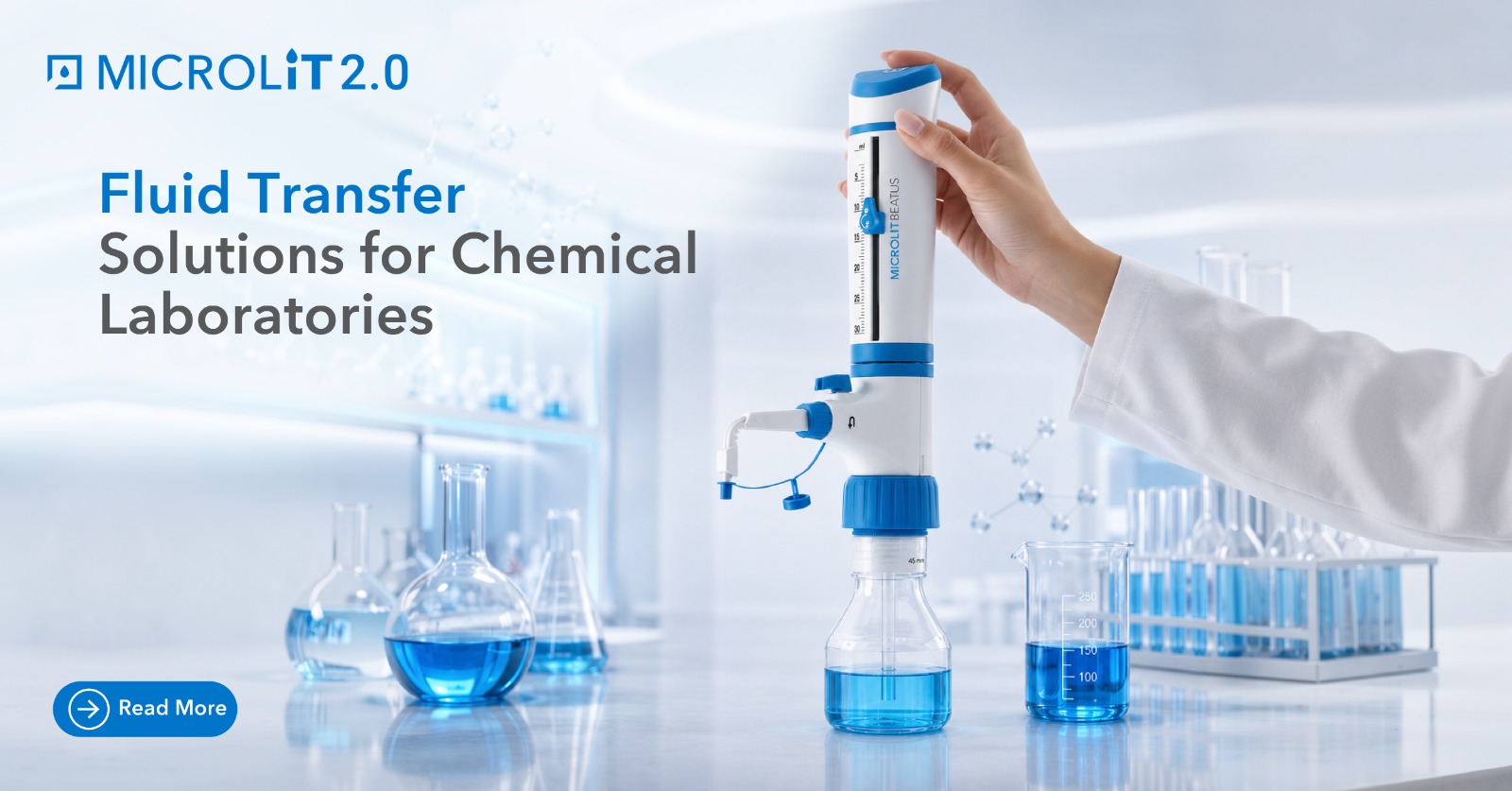
The Microlit BEATUS Bottle Top Dispenser is engineered to provide accurate and safe reagent dispensing while offering excellent chemical compatibility for a broad range of laboratory chemicals.
Peristaltic Pumps for Continuous Fluid Transfer
Certain laboratory processes require continuous or high-volume fluid transfer. In such cases, peristaltic pumps provide an effective solution.
Peristaltic pumps move liquids through flexible tubing using rotating rollers, ensuring that the fluid only comes into contact with the tubing itself.
This design offers several advantages:
- Contamination-free fluid transfer
- Gentle handling of sensitive liquids
- Adjustable flow rates
- High accuracy
- Easy maintenance
- Excellent chemical compatibility
Peristaltic pumps are commonly used in:
- Chemical processing laboratories
- Pharmaceutical laboratories
- Environmental testing laboratories
- Research facilities
- Pilot-scale production systems
The Microlit Peristaltic Pump delivers precise flow control and reliable fluid transfer, making it suitable for applications involving both routine and specialized liquid handling requirements.
Vacuum Aspirators for Liquid Removal Applications
Fluid transfer in laboratories is not limited to dispensing alone. Efficient liquid removal is equally important.
Vacuum aspirators help laboratories remove unwanted liquids quickly and safely from various containers and vessels.
Applications include:
- Sample preparation
- Supernatant removal
- Waste liquid collection
- Cell culture workflows
- Cleaning procedures
Compared to manual liquid removal methods, vacuum aspirators improve efficiency, reduce contamination risks, and minimize operator effort.
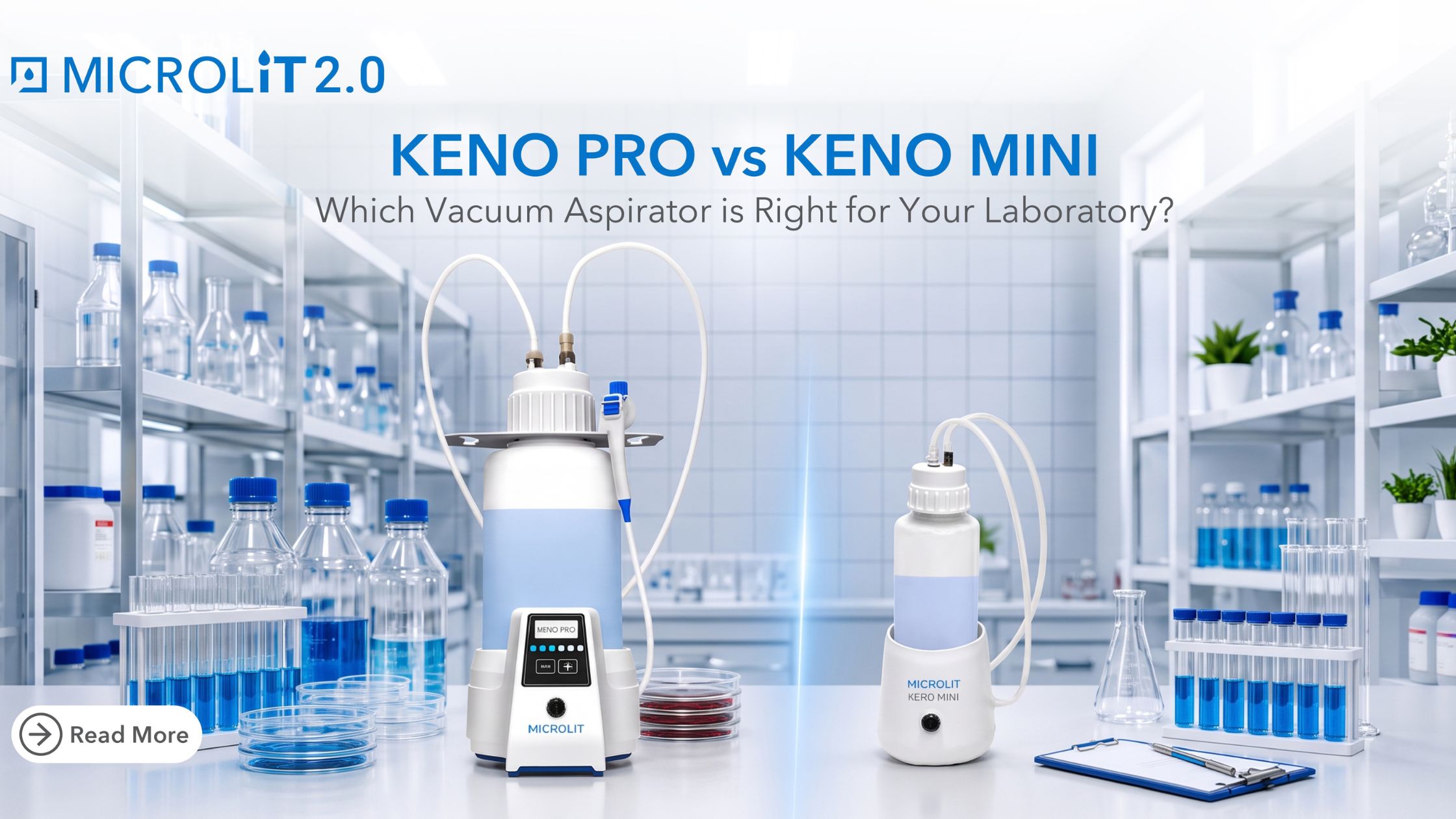
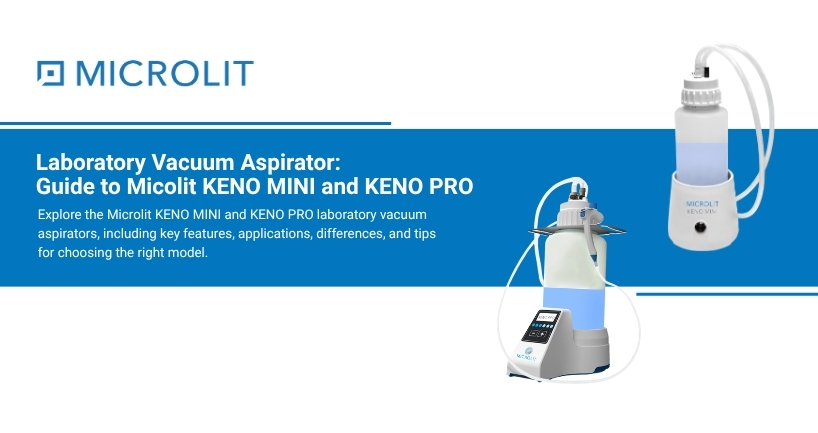
Solutions such as the Microlit KENO MINI and Microlit KENO PRO provide laboratories with portable and reliable aspiration capabilities suitable for a variety of applications.
Factors to Consider When Selecting Fluid Transfer Equipment
Choosing the right fluid transfer solution depends on several factors.
Chemical Compatibility
Equipment should be compatible with the chemicals being handled to ensure durability and safe operation.
Volume Range
Different applications require different dispensing volumes. Selecting equipment designed for the required range improves accuracy.
Accuracy and Precision
High-quality liquid handling instruments help laboratories maintain consistent and reproducible results.
Ergonomics
User comfort is especially important in laboratories performing repetitive tasks throughout the day.
Maintenance Requirements
Instruments that are easy to clean, calibrate, and maintain reduce downtime and improve productivity.
Application Requirements
The type of laboratory process often determines the most suitable liquid handling solution.
For example:
- Small-volume analytical testing may require micropipettes.
- Repetitive dispensing may benefit from electronic pipettes.
- Large-volume reagent transfer may require bottle top dispensers.
- Continuous fluid movement may call for peristaltic pumps.
- Liquid removal tasks may be best handled using vacuum aspirators.
The Future of Liquid Handling in Chemical Laboratories
As automation continues to transform laboratory operations, the demand for advanced fluid transfer solutions is growing rapidly.
Modern laboratories increasingly seek equipment that offers:
- Greater accuracy
- Enhanced automation
- Improved ergonomics
- Reduced contamination risks
- Better data reproducibility
- Higher throughput
Technological advancements in liquid handling systems are helping laboratories improve efficiency while maintaining the precision required for scientific excellence.
Conclusion
Accurate and reliable fluid transfer is fundamental to the success of modern chemical laboratories. From sample preparation and reagent dispensing to continuous processing and waste removal, every stage of laboratory work depends on effective liquid handling.
By investing in specialized fluid transfer solutions such as micropipettes, electronic pipettes, bottle top dispensers, peristaltic pumps and vacuum aspirators, laboratories can improve accuracy, enhance safety, reduce errors and streamline workflows.
Microlit’s comprehensive range of liquid handling solutions—including the NERO Micropipette, AQUA Electronic Pipette, BEATUS Bottle Top Dispenser, Peristaltic Pump, KENO MINI and KENO PRO—helps laboratories meet the evolving demands of modern chemical research and testing.
As laboratory standards continue to rise, choosing the right fluid transfer equipment is no longer just a matter of convenience it is a critical step toward achieving reliable results, operational efficiency and long-term scientific success.