Universal Tip Compatibility: Why It Matters in Modern Laboratories
- July 16, 2026
- ENQUIRE NOW
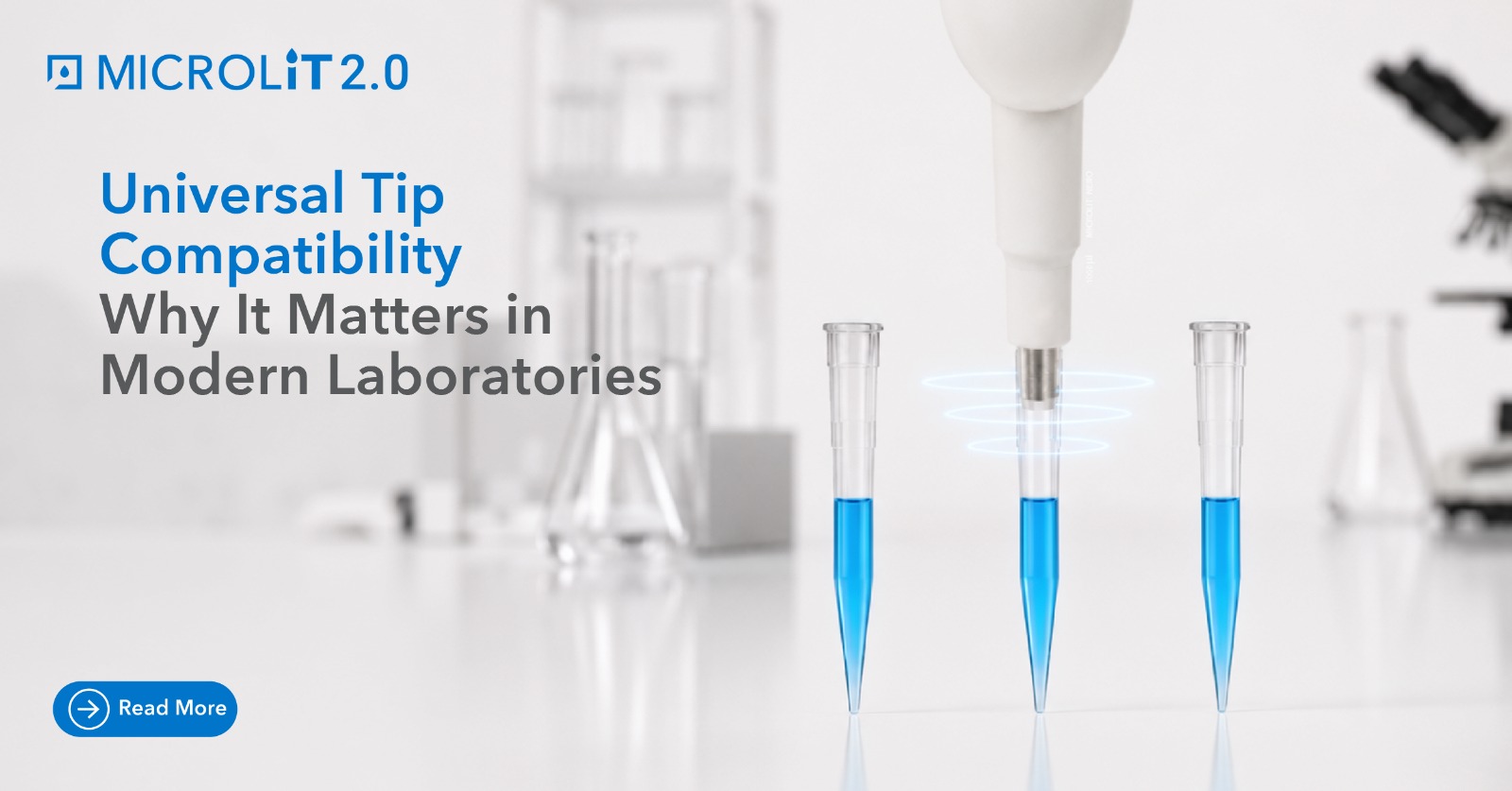
In today’s laboratories, precision, efficiency and reliability are essential for producing accurate experimental results. While much attention is given to selecting the right micropipette, one equally critical factor is often overlooked—the compatibility of pipette tips. Choosing universal pipette tips that fit securely across multiple pipette brands can significantly improve workflow, reduce costs and maintain the integrity of liquid handling processes.
As laboratories continue to adopt equipment from multiple manufacturers, universal tip compatibility has become more important than ever. Whether you’re working in pharmaceuticals, biotechnology, diagnostics, food testing or academic research, using high-quality universal tips can make a noticeable difference in day-to-day laboratory operations.
What is Universal Tip Compatibility?
Universal tip compatibility refers to the ability of a pipette tip to fit securely on micropipettes from different manufacturers while maintaining an airtight seal. A truly compatible tip ensures accurate aspiration and dispensing without leakage, wobbling, or inconsistent performance.
Rather than purchasing separate tips for different pipette brands, laboratories can standardize on a single, high-quality universal tip, simplifying procurement and inventory management.
Why Universal Tip Compatibility Matters
-
Ensures Accurate Liquid Handling
The relationship between a micropipette and its tip directly affects measurement accuracy. A poorly fitting tip may:
- Leak air during aspiration
- Dispense inconsistent volumes
- Require excessive force to attach
- Fall off during operation
These issues introduce variability into experiments and may compromise research outcomes.
Universal tips designed with precision molding provide a secure seal, ensuring reproducible results every time.
-
Improves Laboratory Efficiency
Modern laboratories operate under strict timelines. Researchers cannot afford delays caused by incompatible consumables.
Universal compatibility allows laboratories to:
- Use one tip across multiple pipette brands
- Reduce time spent searching for compatible consumables
- Simplify daily laboratory workflows
- Increase productivity
This flexibility becomes especially valuable in multi-user laboratories where different pipette brands coexist.
-
Reduces Inventory Complexity
Managing laboratory consumables can quickly become challenging when every pipette requires a different tip.
Using universal pipette tips enables laboratories to:
- Maintain fewer stock-keeping units (SKUs)
- Simplify purchasing decisions
- Reduce storage space
- Prevent stock shortages of specific tip types
Procurement teams also benefit from streamlined ordering processes and lower administrative effort.
-
Lowers Operating Costs
Laboratories constantly seek opportunities to optimize costs without compromising quality.
Universal pipette tips help reduce expenses by:
- Consolidating purchases
- Minimizing emergency orders
- Lowering inventory carrying costs
- Increasing purchasing flexibility
Because compatible tips can be used across multiple instruments, laboratories gain better value from every purchase.
-
Supports Multi-Brand Laboratories
Very few laboratories rely on a single pipette manufacturer.
A typical lab may use:
- Single-channel pipettes
- Multi-channel pipettes
- Mechanical pipettes
- Electronic pipettes
These instruments often come from different suppliers.
Universal tips eliminate compatibility concerns, allowing scientists to focus on experiments rather than consumables.
-
Prevents Experimental Errors
Even minor air leaks caused by poor tip fitting can affect:
- PCR reactions
- ELISA assays
- Cell culture applications
- Molecular biology workflows
- Pharmaceutical testing
A secure tip fit ensures accurate aspiration and dispensing, reducing the chances of experimental failure.
Characteristics of High-Quality Universal Tips
Not every tip marketed as “universal” offers the same level of performance.
Reliable universal pipette tips should provide:
Precision Engineered Fit
A well-designed tip forms an airtight seal without requiring excessive insertion force.
High Transparency
Clear tips allow users to easily verify liquid levels and detect air bubbles.
Low Retention Surface
Low-retention interiors minimize sample loss, particularly when handling:
- Proteins
- Enzymes
- DNA
- RNA
- Viscous liquids
Consistent Dimensions
Uniform manufacturing ensures every tip performs identically, improving reproducibility.
DNase/RNase Free
Molecular biology applications require contamination-free consumables to protect valuable samples.
Sterile Options
Sterile tips help maintain aseptic conditions in microbiology, diagnostics, and pharmaceutical laboratories.
Applications Where Universal Compatibility Makes a Difference
Universal pipette tips are widely used in:
- Pharmaceutical Quality Control
- Biotechnology Research
- Clinical Diagnostics
- Molecular Biology
- Food & Beverage Testing
- Environmental Testing
- Academic Laboratories
- Chemical Analysis
- Life Science Research
Their versatility makes them an indispensable laboratory consumable.
Why Tip Quality Matters as Much as Pipette Quality
Even the most accurate micropipette cannot deliver reliable results if paired with a poor-quality tip.
A premium pipette combined with an inferior tip can lead to:
- Volume inaccuracies
- Sample loss
- Increased user fatigue
- Frequent tip replacement
- Poor reproducibility
For this reason, laboratories should evaluate pipettes and tips as a complete liquid handling system rather than independent products.
Microlit Universal Pipette Tips: Precision You Can Trust
Microlit understands that reliable liquid handling begins with dependable consumables. That’s why Microlit Universal Pipette Tips are engineered to deliver exceptional compatibility, accuracy, and consistency across a wide range of micropipettes.
Designed using precision injection molding technology, Microlit tips provide:
- Universal compatibility with leading pipette brands
- Secure, leak-proof fit
- Excellent dimensional consistency
- High optical clarity
- Low retention surface for maximum sample recovery
- DNase, RNase, and pyrogen-free options
- Sterile and non-sterile variants
- Manufactured in a controlled cleanroom environment
- Stringent quality control for batch-to-batch consistency
Whether your laboratory uses Microlit pipettes or instruments from multiple manufacturers, Microlit Universal Tips ensure dependable performance with every aspiration and dispense.
Choosing the Right Universal Tip
When selecting pipette tips, consider the following:
- Compatibility with your pipette models
- Sterility requirements
- Sample type
- Required volume range
- Low-retention properties
- Purity certification
- Manufacturing quality
Purchasing low-cost consumables without verifying compatibility may ultimately cost more through failed experiments and repeated testing.
The Future of Laboratory Consumables
As laboratories become increasingly automated and standardized, universal compatibility will continue to play a vital role in improving operational efficiency.
Researchers now expect consumables that:
- Work seamlessly across instruments
- Deliver consistent performance
- Support automation
- Reduce waste
- Simplify procurement
- Maintain the highest quality standards
Universal pipette tips are no longer simply accessories they are an essential component of modern laboratory workflows.
Conclusion
Universal tip compatibility is more than a convenience it is a critical factor influencing laboratory accuracy, efficiency, and cost-effectiveness. By investing in high-quality universal pipette tips, laboratories can streamline workflows, improve reproducibility, reduce inventory complexity, and enhance overall productivity.
Microlit Universal Pipette Tips are engineered to meet the evolving needs of modern laboratories, offering reliable compatibility, superior precision, and uncompromising quality. Whether you’re conducting routine analyses or advanced research, choosing the right pipette tip ensures every microliter counts.