Manual Liquid Removal vs. Vacuum Aspirators: Which is More Efficient for Modern Laboratories?
- July 17, 2026
- ENQUIRE NOW
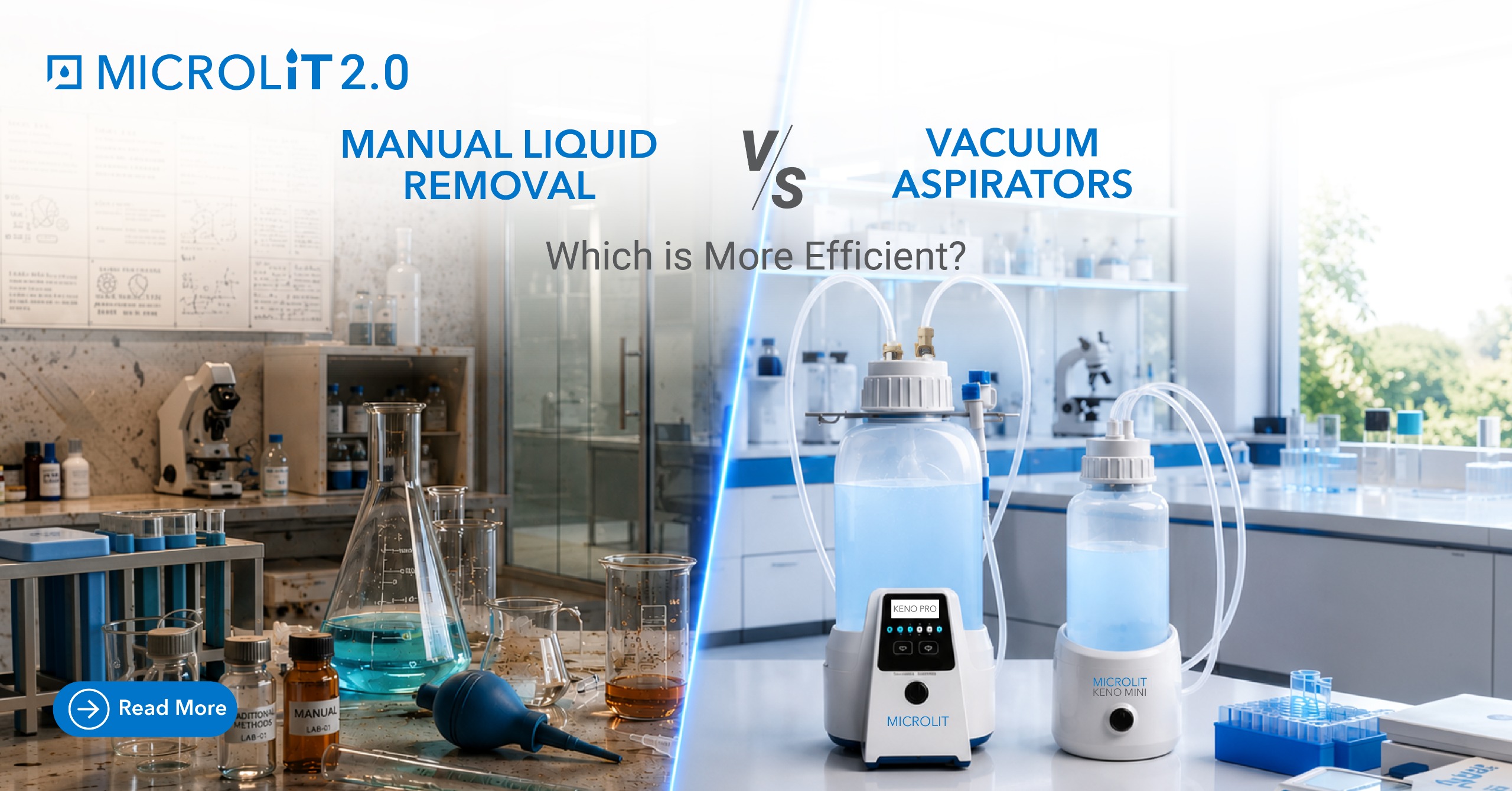
In every laboratory, precision and efficiency are the foundation of reliable scientific outcomes. While most attention is given to liquid dispensing, the process of liquid removal is equally critical. Whether you’re removing culture media, supernatants, wash buffers, or waste liquids, the method you choose can significantly impact workflow, sample integrity, and operator safety.
Many laboratories still rely on manual liquid removal methods using pipettes or squeeze bottles. While these techniques may seem economical, they often consume valuable time, increase operator fatigue, and raise the risk of contamination.
This is where vacuum aspirators have transformed laboratory workflows. Designed to simplify liquid aspiration, lab vacuum aspirators offer speed, precision, and safety while reducing repetitive manual effort.
So, which method is truly more efficient manual liquid removal or a vacuum aspirator? Let’s explore.
Understanding Manual Liquid Removal
Manual liquid removal typically involves using pipettes, serological pipettes, Pasteur pipettes, or disposable transfer pipettes to aspirate liquids from laboratory vessels.
This approach is still common in smaller laboratories due to its low initial investment and familiarity among users.
However, as laboratories become busier and experiments more demanding, manual aspiration presents several challenges.
Limitations of Manual Liquid Removal
-
Time-Consuming
Removing liquids manually from multiple wells, culture dishes, or tubes takes considerably longer than automated aspiration methods.
-
Inconsistent Results
The amount of residual liquid often depends on the user’s skill and consistency, affecting experimental reproducibility.
-
Operator Fatigue
Repeated pipetting throughout the day can strain hands, wrists, and shoulders, increasing the risk of repetitive stress injuries.
-
Higher Risk of Contamination
Frequent manual handling increases opportunities for cross-contamination and accidental spills.
-
Limited Productivity
Laboratories processing hundreds of samples daily can lose significant time performing repetitive manual aspiration.
Although manual methods still have a place for occasional applications, they become inefficient for routine or high-throughput workflows.
What is a Vacuum Aspirator?
A vacuum aspirator is a laboratory instrument designed to safely and efficiently remove liquids using controlled vacuum pressure.
Instead of manually pipetting liquids, the aspirator generates suction that quickly transfers liquid waste into a collection bottle, minimizing handling and reducing contamination risks.
Modern lab vacuum aspirators are widely used in:
- Cell culture laboratories
- Microbiology laboratories
- Molecular biology research
- Clinical diagnostics
- Pharmaceutical laboratories
- Biotechnology research
- Academic institutions
Their versatility makes them an indispensable laboratory tool.
Why Vacuum Aspirators Are More Efficient
-
Faster Liquid Removal
A vacuum aspirator removes liquids in seconds, significantly reducing processing time compared to manual pipetting.
Whether aspirating media from culture plates or removing supernatants after centrifugation, the process becomes remarkably faster.
-
Improved Laboratory Productivity
Researchers can spend more time on experiments and less on repetitive liquid removal tasks.
This translates into higher throughput and better utilization of laboratory resources.
-
Better Ergonomics
Manual aspiration requires continuous thumb pressure and repetitive pipetting.
Portable aspirators eliminate repetitive hand movements, reducing operator fatigue and improving comfort during long laboratory sessions.
-
Enhanced Safety
Laboratory waste may contain infectious materials, hazardous chemicals, or biological contaminants.
A closed aspiration system minimizes exposure, reducing risks associated with splashes and aerosol formation.
-
Consistent Performance
Unlike manual techniques, vacuum aspirators provide uniform suction throughout the aspiration process, resulting in cleaner wells and more reproducible experiments.
Applications of Laboratory Vacuum Aspirators
Today’s lab vacuum aspirators support a wide variety of laboratory procedures, including:
- Cell culture media removal
- Washing adherent cells
- Removing supernatants
- ELISA washing
- PCR preparation
- Plate washing
- Buffer exchange
- Waste liquid collection
- Sample cleanup
- Routine laboratory liquid aspiration
Their flexibility makes them suitable for both research and diagnostic laboratories.
Choosing the Right Vacuum Aspirator
Not every laboratory has identical requirements.
Some require a compact solution for occasional use, while others need a high-performance aspirator capable of continuous operation.
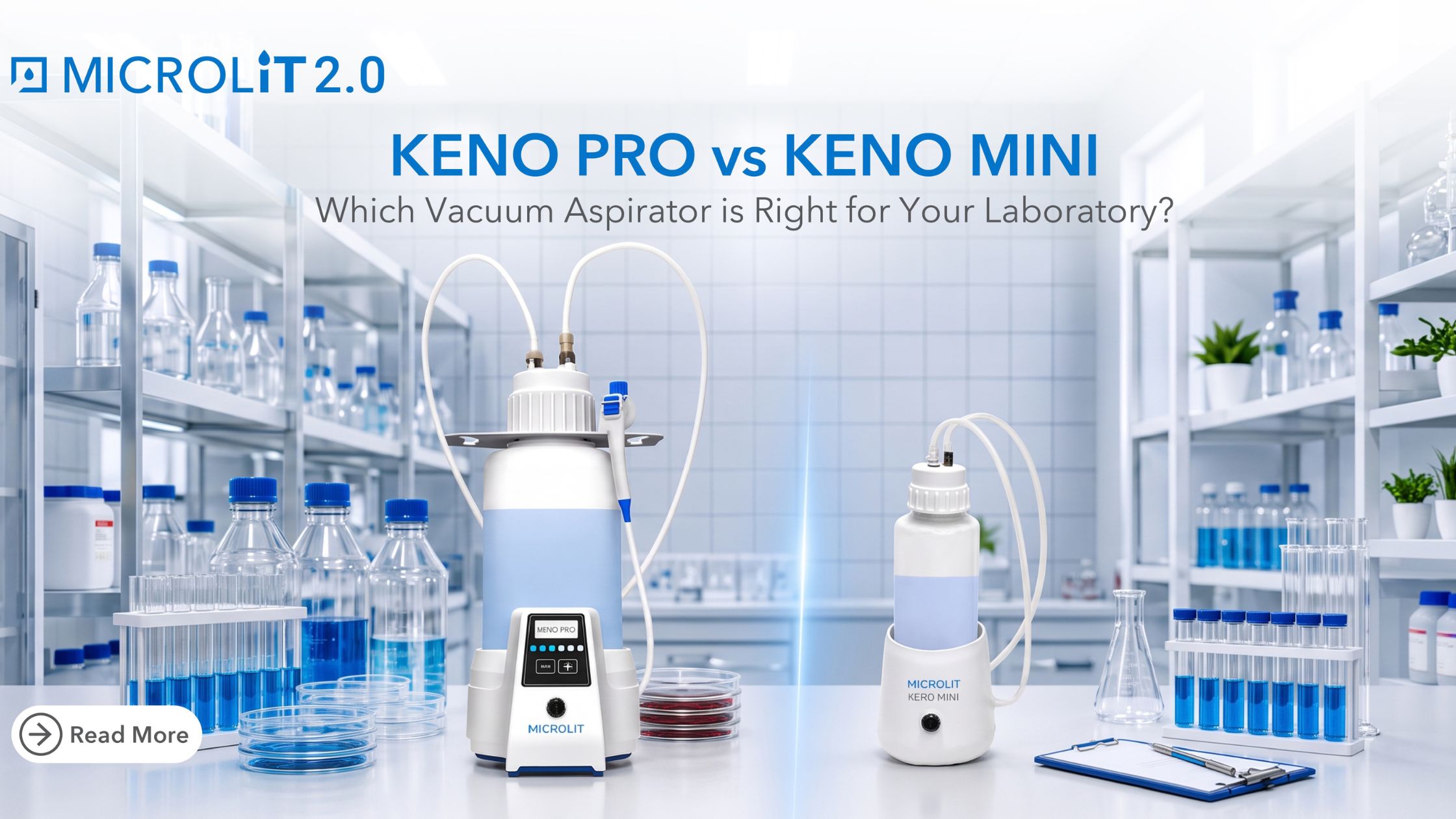
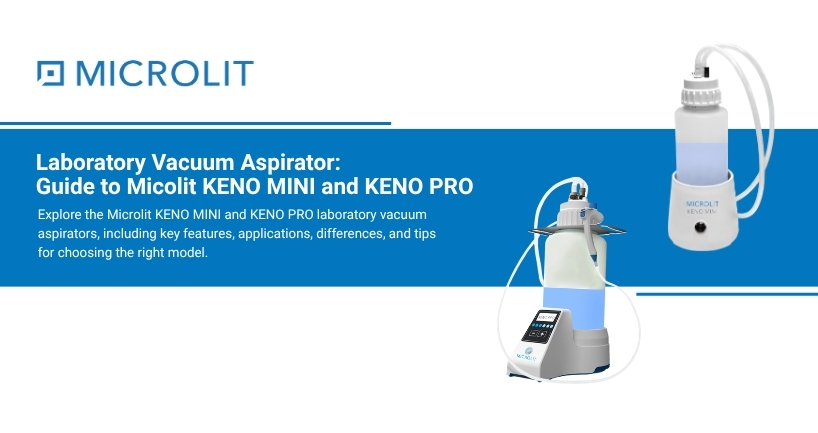
Microlit addresses both needs with two advanced solutions – the Microlit KENO MINI and Microlit KENO PRO.
Microlit KENO MINI – Compact Performance for Everyday Laboratories
The Microlit KENO MINI is a lightweight and compact portable aspirator designed for laboratories that require convenient liquid aspiration without compromising efficiency.
Ideal for:
- Small laboratories
- Educational institutions
- Research laboratories
- Cell culture applications
- Routine liquid removal
Its compact footprint saves valuable bench space while delivering reliable aspiration performance.
Key advantages include:
- Portable and lightweight design
- Easy operation
- Quiet performance
- Efficient liquid removal
- User-friendly handling
- Ideal for everyday laboratory applications
For laboratories seeking a dependable portable aspirator, the KENO MINI offers an excellent balance of convenience and performance.
Microlit KENO PRO – Advanced Vacuum Aspiration for High-Performance Laboratories
For laboratories with demanding workflows, the Microlit KENO PRO delivers enhanced performance, higher efficiency, and reliable continuous aspiration.
Designed for intensive laboratory environments, it supports faster sample processing while maintaining consistent vacuum performance.
Suitable for:
- Biotechnology laboratories
- Pharmaceutical laboratories
- Clinical laboratories
- High-throughput research
- Cell biology applications
Key benefits include:
- Powerful and consistent vacuum performance
- Efficient handling of larger sample volumes
- Stable aspiration control
- Reduced manual effort
- Reliable performance during extended use
- Improved laboratory productivity
The KENO PRO is an ideal choice for laboratories that require professional-grade lab vacuum aspirators capable of supporting demanding daily workflows.
Manual Liquid Removal vs. Vacuum Aspirators: A Quick Comparison
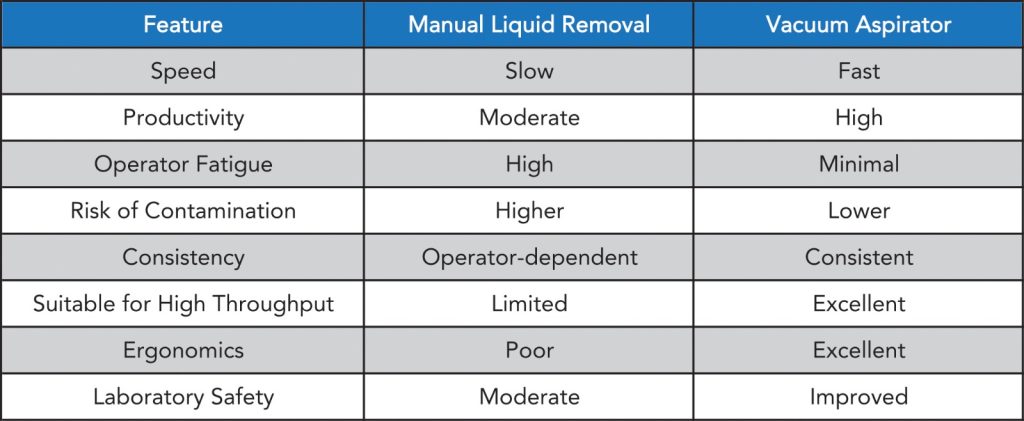
The comparison clearly shows why laboratories across the world are increasingly replacing manual aspiration methods with dedicated vacuum aspirators.
Why Modern Laboratories Are Switching to Portable Aspirators
As laboratory workloads continue to increase, scientists are seeking equipment that is faster, safer, and easier to operate.
Portable aspirators provide the flexibility to move between workstations, occupy minimal bench space, and deliver efficient liquid removal without complex setup.
Whether performing cell culture maintenance, molecular biology protocols, or routine sample preparation, portable vacuum aspiration systems significantly simplify daily laboratory tasks.
With reduced manual handling, improved ergonomics, and greater operational efficiency, these instruments have become essential tools in modern laboratories.
Conclusion
While manual liquid removal may still be suitable for occasional laboratory tasks, it falls short in meeting the speed, consistency, and safety demands of today’s research environments. A vacuum aspirator streamlines liquid aspiration, minimizes operator fatigue, improves reproducibility, and enhances overall laboratory productivity.
Whether your laboratory needs a compact portable aspirator for routine applications or a high-performance solution for continuous workflows, Microlit offers dependable options tailored to your requirements.
The Microlit KENO MINI is ideal for laboratories seeking portability and everyday convenience, while the Microlit KENO PRO delivers robust performance for demanding research settings. Together, they represent a smarter approach to laboratory liquid handling, helping scientists work more efficiently while maintaining the highest standards of safety and precision.
Investing in the right lab vacuum aspirator isn’t just about removing liquids—it’s about improving the quality, efficiency, and reliability of every experiment.